Part 2
Heavy Industry and Agrarian Empires
Wisconsin did not just participate in the American Industrial Revolution. In many ways, our state engineered it. While eastern cities focused on textiles and finance, Wisconsin inventors and business builders looked at the vast, untamed landscape of the American continent and designed the heavy machinery required to tame it, harvest it, and build upon it.
The second installment of our look at Wisconsin business founders focuses on four individuals and partnerships who saw logistical and mechanical challenges not as roadblocks, but as blueprints for global enterprises that continue to this day.
Jerome Increase Case
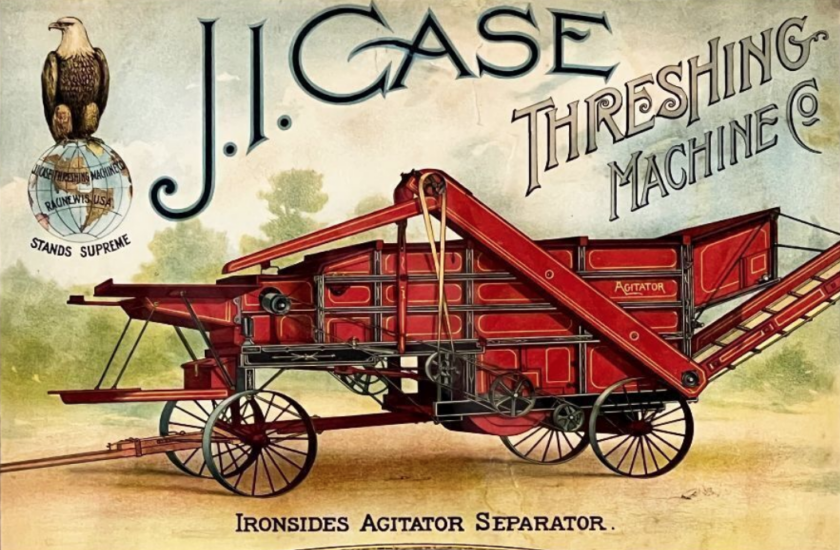
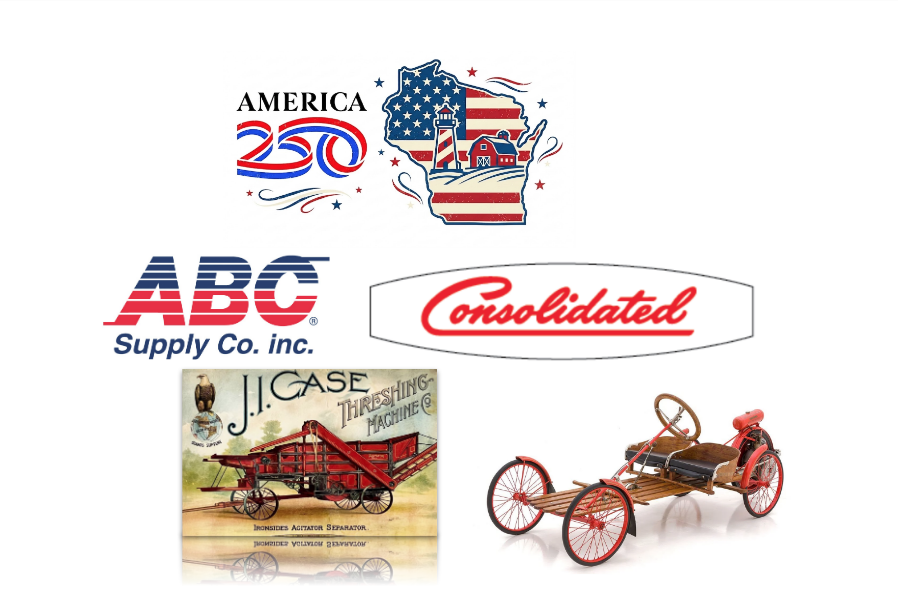
J.I. Case Threshing Machine Company – Racine
Before Wisconsin became America’s Dairyland, it was a wheat empire. In the 1840s, harvesting that wheat was a grueling, slow-moving process that relied almost entirely on muscle and manual labor. Jerome Increase Case, a young migrant from upstate New York, arrived in Racine in 1842 with six ground-hog threshers he had purchased on credit. He sold five along the way and used the sixth to study how to build a better machine.
By 1844, Case achieved his breakthrough by creating a machine that could simultaneously thresh the wheat and separate the grain from the chaff. Previously, these were two separate, incredibly labor-intensive steps. He established the J.I. Case Threshing Machine Company in Racine, taking advantage of the city’s bustling port on Lake Michigan and its growing workforce.
By the late 19th century, Case was the largest manufacturer of steam engines in the world. His machines replaced horses on farms across the Great Plains and the world, drastically lowering the cost of food production and allowing the American Midwest to feed a rapidly urbanizing nation.
Stephen F. Briggs & Harold M. Stratton
Briggs & Stratton – Milwaukee
In 1908, an engineer named Stephen F. Briggs teamed up with an investor named Harry Stratton in Milwaukee. Their initial goal was simple but ambitious: build a reliable, inexpensive automobile. The car project quickly sputtered out, but the partnership left them with an incredibly valuable asset: a highly efficient, lightweight, single-cylinder gasoline engine.
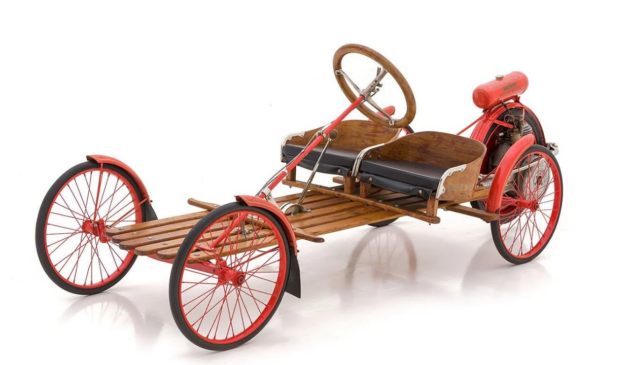
Rather than giving up, Briggs and Stratton realized the true market lay not in the garage, but in everyday utility. They began manufacturing small, reliable engines that could power everything from washing machines in rural homes without electricity to early military equipment during World War I.
The company’s defining moment came when they turned their attention to outdoor maintenance, mastering the small engines that power lawnmowers, garden tillers, and snowblowers. By standardizing parts and perfecting assembly line manufacturing in Milwaukee, Briggs & Stratton made small-engine machinery affordable for the average American suburban family. As the world’s largest producer of air-cooled gasoline engines for outdoor power equipment, their name eventually became synonymous with reliable, American-made mechanical power across the globe.
George W. Mead
Consolidated Water Power & Paper Company – Wisconsin Rapids

At the turn of the 20th century, the Wisconsin River Valley was transitioning away from the wild, unregulated logging era. The state needed sustainable, long-term industrial operations to employ its growing population. Enter George W. Mead, a young businessman who arrived in Grand Rapids (now Wisconsin Rapids) in 1902 to help manage the estate of his late father-in-law, industrialist J.D. Witter.
Mead took control of the newly formed Consolidated Water Power & Paper Company. He quickly realized that the future of the region lay in combining the massive hydraulic power of the Wisconsin River with advanced manufacturing techniques.
Under Mead’s forward-thinking leadership, Consolidated developed a groundbreaking process in 1935 for coating paper on both sides simultaneously at extremely high speeds. This drastically reduced the cost of producing high-quality, glossy paper just as national picture magazines like Life and Look were exploding in popularity. Mead’s innovation turned the Wisconsin River Valley into a global paper-manufacturing powerhouse and provided stable, generational employment for thousands of families in central Wisconsin.
Diane Hendricks
ABC Supply Co. – Beloit
While the early titans of Wisconsin industry laid the state’s physical foundation, modern innovators have completely redesigned how those materials reach the market. In 1982, Diane Hendricks co-founded ABC Supply Co. in Beloit alongside her late husband, Ken Hendricks. They recognized a massive, inefficient gap in the construction industry: independent roofing contractors had to buy materials from multiple, fragmented suppliers, often facing long delays and unpredictable pricing. They solved this by building a unified, wholesale distribution network tailored specifically to the needs of professional contractors. By purchasing wholesale and offering an unprecedented variety of roofing, siding, and windows under one roof, ABC Supply scaled rapidly to become the absolute largest wholesale distributor of its kind in the United States.
Following the sudden, tragic passing of Ken in late 2007, Diane took the sole reins of the company during a period of massive national economic uncertainty. Rather than scaling back, she executed a bold diversification and growth strategy. She steered ABC Supply through its largest acquisitions, including the purchase of rival Bradco Supply in 2010 and L&W Supply in 2016, more than doubling the company’s footprint.
Beyond distribution, she aggressively expanded into commercial real estate and economic development through Hendricks Holding Co. She acquired millions of square feet of abandoned, historic industrial space in Beloit, transforming old ironworks and factories into modern corporate campuses, tech hubs, and vibrant commercial centers. Her vision has permanently reshaped the modern American construction supply chain while directly driving the economic revitalization of the city of Beloit.
Previously at Dairyland Sentinel