Hong and Trump sound an awful lot alike. That might just propel her to victory.
Donald Trump is one of one. Everyone knows it. You cannot clone his political DNA, and you definitely cannot graft his base onto another candidate.
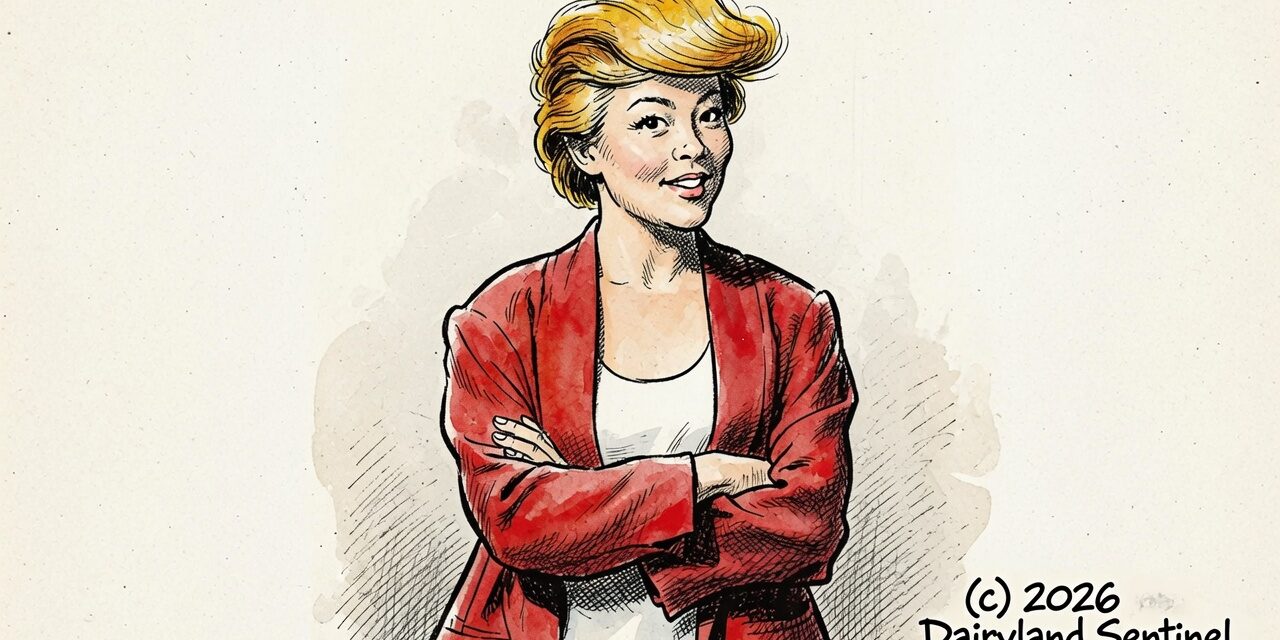
But listen to the core message right now in Wisconsin politics. Listen to the grievances. Listen to the anger about a game fixed against working families. Tom Tiffany, the presumptive GOP nominee, echoes trump when it comes to policy like tax cuts and immigration. However, the politician sounding the most like Trump these days is Democratic Socialist Francesca Hong.
This election gives Wisconsin its first open seat for the state’s highest office in 16 years. Both candidates in the general election will run on a agenda for the future. While campaign ads will scrutinize their opponents past votes and quotes, their visions for the future will be at the forefront.
In races like this, tone and tenor and big-picture ambitions often weigh heavier than concrete policy proposals and past roll call votes. That’s the bet Hong appears to be making.
Despite occupying opposite ends of the political spectrum, Hong and Trump frequently employ identical rhetoric on the campaign trail, repeatedly characterizing American political and economic systems as “rigged.”
Characterizing Systems as “Rigged”
When Hong launched her campaign, she did not mince words. She explicitly stated, “The system is rigged. I’m running for governor to fix it”.
In a recent interview framing her campaign, Hong reinforced this message, saying, “We should democratize our economy because right now it’s rigged against working-class people”.
That exact phrase built the modern Trump movement.
Trump stood before the 2016 Republican convention and declared, “Nobody knows the system better than me, which is why I alone can fix it. I have seen firsthand how the system is rigged against our citizens.”

Economic and Class Divides
While targeting different culprits, both candidates argue that the economy is structured to benefit a select few at the expense of the broader public.
Trump targets federal regulators, global elites, and monetary authority. He argues that the system is rigged to keep incumbents in power and agents of change out.
Hong targets corporations and the super-rich. On her website’s tax policy page, she sums up her core thesis: “The system — our government and their biggest donors — takes money from working people and funnels it to the super-rich”.
She argues that working people are being squeezed by an elite class.
Empathy for the Aggrieved
It is a left-wing translation of Trump’s “forgotten men and women” message, a phrase he cemented in his 2016 victory speech when he promised, “The forgotten men and women of our country will be forgotten no longer.” Just like Trump claimed he joined politics “so that the powerful can no longer beat up on people that cannot defend themselves,” Hong presents herself as a defender of the exploited.
Her articulated empathy for the aggrieved is central to her appeal. She leans into her background as a former chef, a single mother, and someone who understands struggling to make ends meet. She routinely says she is fighting for the working class because she is working class, stating recently: “I know what it’s like to hustle like so many Wisconsinites… People want a governor who’s going to hustle as hard as they do”.
The Wisconsin Appetite for Populism
Do not dismiss this as empty progressive noise that can’t stand the bright lights of examination through a general election.
History shows the Hong template could work.
Ten years ago, Donald Trump won Wisconsin with 1,405,284 votes.He carried 60 of 72 counties, winning by 22,748 votes (0.77 percentage points) and flipping the state red for the first time since 1984. Less than two years ago, Trump won Wisconsin again with 1,697,626 votes. He expanded his raw vote margin to 29,397 votes and carried 58 of 72 counties.
Wisconsin voters have a massive, proven appetite for anti-establishment disruption.
Among many other differences, Hong and Trump remain miles apart on concrete policy. Yet, elections are not won by dueling white papers.
Trump won Wisconsin twice by convincing working-class voters that elites rigged the game against them and he shared their anger and said he would change the broken system. Francesca Hong is betting she can do the exact same thing from the left. In this environment, where voter cynicism is at an all-time high, she might be right.
Previously at Dairyland Sentinel