When a Madison police officer fatally shot 19-year-old Tony Robinson on March 6, 2015, then-Police Chief Mike Koval immediately recognized one key piece of evidence investigators would not have.
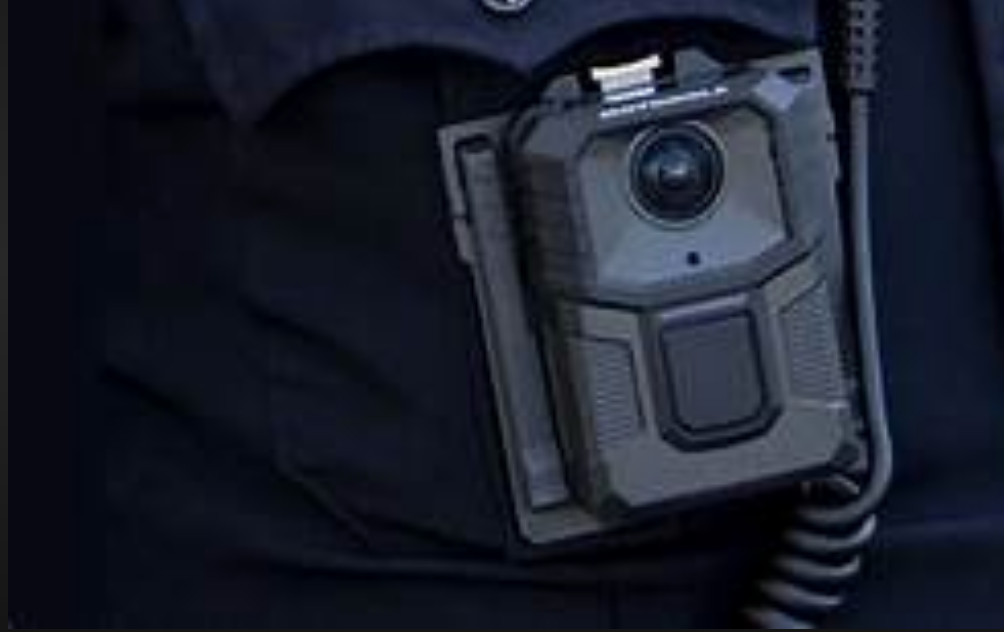
Video from a body-worn camera.
“That’s going to make this all the more complicated for the investigators, for the public to accept,” Koval said in the days following the shooting.
Eleven years later, Madison again finds itself investigating a high-profile officer-involved shooting without body camera footage.
How did that happen?
It wasn’t because nobody thought about body cameras. It happened because Madison’s elected officials, advisory committees and influential activist organizations spent more than a decade debating, delaying and, at times, rejecting their widespread use.
The decision was intentional.
Some argued body cameras would expand government surveillance. Others said they would not improve accountability. Still others believed the city should focus on broader police reforms instead of new technology.
Whatever the reasoning, the result is unmistakable. Madison, Wisconsin’s second-largest city, remains the state’s largest municipality without a department-wide body camera program. While most major Wisconsin law enforcement agencies now routinely equip officers with body-worn cameras, Madison has remained an outlier.
Today, investigators and the public are once again left to reconstruct a controversial police shooting without one piece of evidence that has become commonplace across much of American policing.
The Tony Robinson shooting changed the conversation
The debate over body cameras accelerated after Robinson’s death in 2015.
Across the country, police departments rapidly adopted body-worn cameras following several controversial police shootings. Madison chose a different path.
In May 2015, then-Mayor Paul Soglin explained how the city would study the technology.
“Consistent with the Task Force Report, Madison is now closely examining acquisition of Body Cameras and is also undertaking a full review of policing standards and practices,” he informed President Obama’s Task Force on 21st Century Policing.
Instead of immediately purchasing cameras, Madison created committees, held community forums and spent years debating whether they should ever become standard equipment. Activists questioned whether cameras would improve accountability and if their presence would complicate police-community relations.
Many activists expressed skepticism
Unlike many cities where activists pushed for body cameras, some of Madison’s most influential activist organizations argued they could do more harm than good.
Young, Gifted and Black Co-founder Brandi Grayson, who has said she personally supports police body cameras, noted community feedback following the Robinson shooting was overwhelmingly opposed to the technology.
“After the information from the forums was tallied, it was indisputable, black and brown people don’t want body cameras in their communities,” she said.
Public testimony before city committees reflected similar concerns.
As reported by Madison365:
“Testimony from citizens, which included people of color and victims of domestic abuse, emphasized that the city wasn’t quite ready for the cameras, but should instead look to improve trust and police/community relations.”
Freedom Inc. Co-Executive Director M. Adams argued that video itself would not solve the underlying problem.
“It’s not that we don’t know what happened.”
Instead, Adams said the issue was who controls the footage and who determines whether misconduct occurred.
“These things do not produce the outcomes we want.”
During debate over a pilot program, Madison resident Michelle Ellinger Linley argued cameras would expand government surveillance.
“We have to acknowledge that body-worn cameras do contribute to the system of mass criminalization,” she said three years ago. “The purpose is not to make our communities safer, but to uphold unnecessary surveillance, tracking and record keeping of communities at highest risk for exploitation.”

No spin or clickbait in this four minute update.
City committees repeatedly urged caution
More than a decade ago, in September 2015, Madison’s Community Policing and Body Camera Ad Hoc Committee voted 4-2 against recommending a pilot program.
Committee Chair Veronica Lazo said the city should address broader concerns first.
“Right now we need to pay attention to the concerns of the community first. Take care of that, then possibly move forward in the future with the use of body cameras,” she said at the time.
The committee also concluded that decisions regarding body cameras should be guided by community members rather than the police department because of concerns involving privacy, undocumented immigrants and civil liberties.
Skepticism continued for years
The debate did not end after 2015.
Former Alder Yannette Figueroa Cole remained opposed to implementing body cameras.
“As I have expressed in multiple occasions, I do not support the implementation of Body Worn Cameras,” Figueroa Cole said in 2021.
“I cannot approve something that doesn’t have a policy and procedure behind it that is potentially going to hinder the community more than help the community,” the AP reported her saying.
Former Alder Matthew Braunginn also concluded cameras were not the answer.
“But I no longer think they are worth the investment,” he said. “The problem we have is not the lack of video evidence; it is in holding officers accountable for misconduct.”
Braunginn made those comments in a guest column for the Madison newspaper, Isthmus. The column was headlined: Why I no longer support body-worn cameras for police.
Police leadership was prepared to implement cameras
Madison police leadership generally left the decision to elected officials. In January of 2018, following an outside review of the department, the Madison Police Department stated:
“If the department is provided direction (and funding) to expand the use of body-worn cameras we will implement the program as effectively and efficiently as possible.”
The city’s independent review by the OIR Group also concluded policies should be established before cameras were deployed.
“It is imperative that clear policy is developed before body-worn cameras are actually deployed in Madison,” they sad in their December 2017 report, according to Madison TV Station WISC.
The mayor questioned whether cameras prevent misconduct
Mayor Satya Rhodes-Conway has never argued body cameras have no value.
Instead, she questioned whether they prevent misconduct.
“I tend to think they are more potentially useful for accountability after the fact and not so much as a deterrent,” she told In Business Madison in 2023. “I frankly would rather focus on the actual deterrents so this kind of thing never happens in Madison again. That’s where I think the conversation should be.”
Madison became an outlier
Over the past decade, body cameras have become standard equipment in many Wisconsin law enforcement agencies, including Milwaukee, Green Bay, Kenosha, Racine, Eau Claire and numerous sheriff’s offices. Madison has not followed that trend.
Arizona State University Professor Michael White, one of the nation’s leading researchers on police body cameras, recently told The Associated Press that Madison’s position is increasingly unusual.
“There are very, very few agencies of that size that do not have a body-worn camera program,” he said. “Madison has a long-standing tradition of being an innovative, progressive police department, so it’s startling.”
An independent researcher who evaluated Madison’s recent pilot program also challenged the long-held narrative that opposition primarily reflected the wishes of communities most affected by policing.
Generally, Broderick Turner told the AP, “Black communities tend to want body cameras, but Madison is majority white.”
“The groups opposed were less impacted by crime and less impacted by policing,” he added.
Another investigation without body camera evidence
Nevertheless, the January 2021 Final Report and Model Policy of the Police Body-Worn Camera Feasibility Review Committee noted, “The public support they enjoy thus masks challenges to and unintended consequences of BWCs that make the decision whether to implement a BWC program, and if so, how, much more complicated than they first appear. Various segments of Madison, especially among some marginalized communities, are strongly opposed to BWC implementation, citing a variety of costs and detrimental effects. Our Committee worked hard to understand all of these potential benefits and potential harms. The picture that emerged is a complicated one.”
Supporters of body-worn cameras continue to argue they provide objective evidence, protect officers against false allegations and strengthen public confidence. Opponents continue to argue they expand surveillance, threaten privacy and cannot substitute for meaningful police accountability.
That debate has defined Madison’s approach for more than a decade. This week’s officer-involved shooting demonstrates the practical consequence of those decisions and that delay.
Investigators will examine physical evidence, witness statements, forensic findings and any available bystander and surveillance footage. What they will not examine is body camera footage from the officers involved. Because none exists.
That is the same reality Chief Koval described after the Tony Robinson shooting more than a decade ago.
Today, the city is once again asking investigators and the public to reconstruct one of its most controversial police encounters without one of the most valuable pieces of evidence modern policing can provide.
Former Mayor Soglin has a theory why, and he shared it in a Facebook post on Friday.
Why Madison Police do not have body cameras:
Prior to 2016, real reason: cost of storage of data
Since 2017: stated reason, “Invasion of a citizens privacy.”
Since 2017, real reasons:
1. It increases city’s liability not having information a body camera provides.
2. The police want it, therefore we say, “No.”
Originally published 6:53pm July 25, 2026