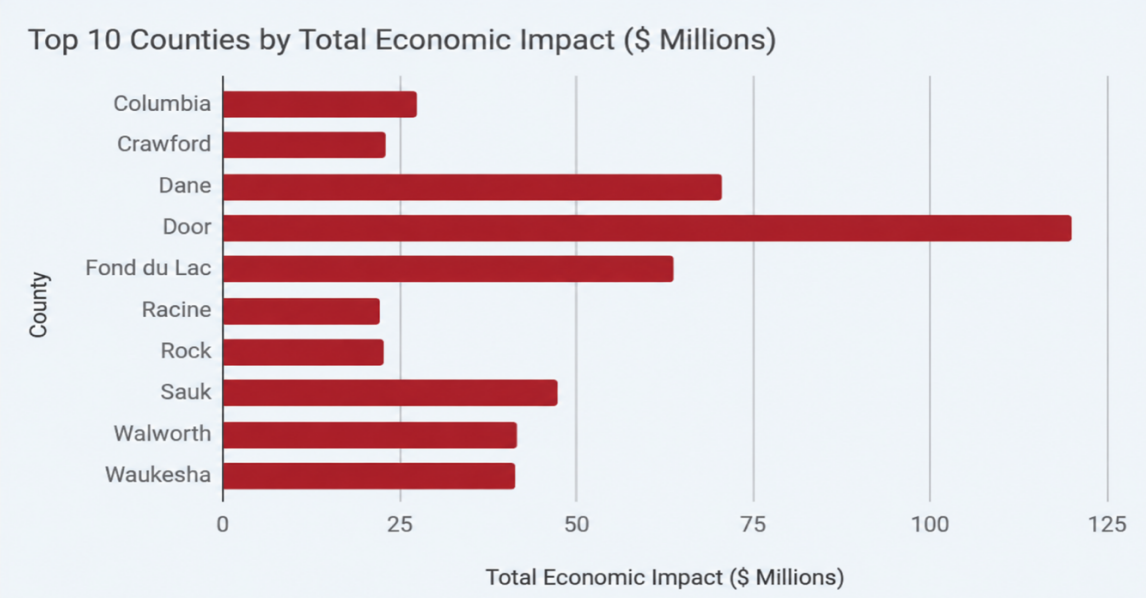
A sample of 240 agritourism destinations across Wisconsin generated more than $765 million in economic impact and attracted more than 4.3 million visitors in 2025, according to a new study released by the Wisconsin Agricultural Tourism Association.
Gov. Tony Evers joined agricultural leaders at Schuster’s Farm to discuss the findings of the yearlong study, which examined economic activity at working farms and attractions including pumpkin patches, corn mazes, orchards, wineries, Christmas tree farms and event venues.
“For the first time, we have data that directly shows how visitors to Wisconsin’s agricultural destinations boosted rural economies,” WATA Executive Director Sheila Everhart said. “Agriculture and Tourism are critical to our state’s economy and reputation, and now we have the hard numbers to show just how important agricultural tourism is.”
The study found the destinations generated $602 million in direct consumer spending. Using an average statewide multiplier of 1.42, researchers calculated a total economic impact of more than $765 million.
Visitors traveling fewer than 50 miles accounted for 73.9% of visits. Those visitors spent an average of $83 per trip and generated an estimated $295 million in economic activity.
Visitors traveling more than 50 miles represented 26.1% of visits. They spent an average of $236 per stop and contributed an estimated $307 million to local economies through spending on attractions, lodging, restaurants and other businesses.
“The strength of agricultural tourism is its ability to create a connection between agriculture and the communities and visitors who support it,” Everhart said. “When people visit a farm, attend an agricultural event or purchase products directly from a producer, they are contributing to an economic ecosystem that reaches throughout the community.”
The report describes agritourism as a growing source of supplemental income for farms looking to diversify revenue streams amid rising costs and shifting market conditions.
According to the study, Wisconsin had 9,695 dairy farms a decade ago, compared with 5,115 on Jan. 1, 2026. By August, the number had fallen to 4,991, marking the first time Wisconsin dropped below 5,000 dairy farms.
The report also highlighted the sector’s potential for growth. While the 2022 USDA Census of Agriculture identified 660 Wisconsin farms engaged in agritourism and direct-to-consumer sales, WATA said additional farmers are exploring on-farm experiences as a way to supplement farm income.
Funded through a U.S. Department of Agriculture Specialty Crop Block Grant, the study tracked visitor activity from Jan. 1 through Dec. 31, 2025, using Placer.ai location data and spending estimates derived from Wisconsin Department of Tourism and U.S. Department of Labor data.
Association leaders said the findings could help local governments, economic development groups and business leaders better understand the role agritourism plays in rural economies.
“We look forward to connecting with business and civic leaders about how they can use the study to benefit their communities, businesses and agricultural tourism destinations near them,” Everhart said.