
Part 4
Wisconsin in America at 250: More Doers from the Dairy State
This chapter of Wisconsin’s industrial evolution is a story of adaptation. As the state transitioned away from its early agrarian roots and foundational timber era, a new generation of entrepreneurs looked at the changing landscape and chose to build global brands right from the soil of southern and southeastern Wisconsin. These pioneers took localized craftsmanship and scaled it into international powerhouses, ultimately bridging the gap between heavy mechanical engineering and the modern digital frontier.
The fourth installment of our look at Wisconsin business founders focuses on five individuals and partnerships who saw changing markets and societal shifts not as roadblocks, but as blueprints for global enterprises that continue to this day.
Captain Frederick Pabst & Frederick Miller
Pabst Brewing Company & Miller Brewing Company – Milwaukee
In the mid to late 19th century, Milwaukee’s proximity to pure water, regional ice crops, and growing agricultural yields made it fertile ground for brewing. However, it was the visionary leadership of Captain Frederick Pabst and Frederick Miller that transformed a localized immigrant trade into a massive national industry.
Pabst took the reins of the Best Brewing Company, implementing advanced refrigeration technologies and massive cellars to brew at an unprecedented scale. His marketing acumen culminated in the famous “Blue Ribbon” branding, turning a local beverage into America’s largest-selling beer by the turn of the century.
Concurrently, Frederick Miller purchased the Old Watertown Plank Road Brewery, leveraging its natural hillside caves for aging. Miller focused on consistent quality and rapid expansion via the state’s growing rail networks. Together, these men did not just brew beer; they pioneered mass distribution, nationwide advertising, and large-scale industrial bottling, permanently making Milwaukee synonymous with American brewing heritage.
Ole Evinrude
Evinrude Motor Company – Milwaukee
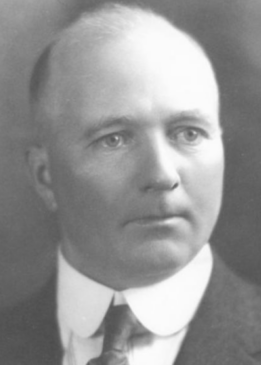
As the 20th century dawned, Wisconsin’s precision machining culture shifted toward personal transportation. Ole Evinrude, working out of a small Milwaukee shop, revolutionized marine recreation. Frustrated by a long row across a lake to get ice cream for his fiancée, Bess, Evinrude designed a practical, lightweight, two-horsepower outboard motor in 1909.
With Bess managing the marketing and business operations, the Evinrude Motor Company mechanized global waterways, turning a novelty into an essential industry for commercial fishing, transport, and leisure alike. The company established Wisconsin as a global hub for marine innovation, transforming how people interact with water across the world.
Thomas B. Jeffery
Thomas B. Jeffery Company – Kenosha
Further south in Kenosha, Thomas B. Jeffery was charting a parallel path on land. A former bicycle manufacturer, Jeffery developed the Rambler automobile in 1902. He was an early pioneer of mass production, utilizing assembly line methods well before Henry Ford standardized them.
By the time his company created the legendary four-wheel-drive Jeffery Quad truck, used heavily by Allied forces in World War I, Kenosha was firmly established as an automotive manufacturing capital. Jeffery proved that Wisconsin could compete directly with Detroit on the global stage, laying the groundwork for a century of automotive labor and production in the southeastern corner of the state.
Dale & Ruth Michels
Michels Corporation – Brownsville
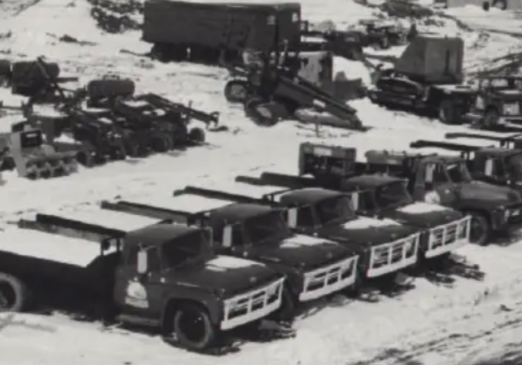
While early titans built outward and upward, a different empire took shape from the ground down. In 1959, Dale Michels, a pipeline laborer, partnered with his wife, Ruth, to establish Michels Pipeline Construction in Brownsville. In the early days, Dale ran the field crews while Ruth managed the administrative backbone, balancing books and driving dump trucks to keep operations moving.
The company’s major evolution came in 1988, when Michels became an early adopter of Horizontal Directional Drilling (HDD). This trenchless technology allowed them to install pipelines, cables, and conduits underneath rivers and highways without disrupting the surface. By mastering HDD, Michels positioned itself as the premier infrastructure builder for the modern energy grid and the massive fiber optic telecommunications boom of the 1990s.
Following Dale’s passing in 1998, Ruth stepped in as Chairwoman, steering exponential expansion into wind energy and electrical transmission alongside their sons. By the time Ruth passed away in 2020, the small regional utility contractor had transformed into Michels Corporation, an international infrastructure giant. Driven by rapid growth over the last decade, the private powerhouse now operates out of more than 50 offices worldwide, deploying 18,000 pieces of heavy equipment with a core workforce of 10,000 permanent personnel. This immense footprint swells by thousands more through contracted labor and union trade halls, securing its place as one of North America’s absolute largest utility and energy contractors.
Judy Faulkner
Epic Systems – Verona

The lineage of Wisconsin innovation finds its modern expression in the rolling hills of Verona, where Judy Faulkner built Epic Systems. Founded in 1979 in a Madison basement with just a handful of employees, Faulkner used her computer science expertise to tackle a massive, unorganized problem: healthcare data.
Faulkner designed a database architecture that placed patient care at the center of the software, creating a comprehensive electronic health records system. Rejecting Wall Street pressure to go public or take on massive venture capital, Faulkner kept Epic independently owned, allowing for steady, uncompromising long-term development.
Today, Epic holds the medical records of more than half of the United States population. Fueled by a massive surge over the last few years that saw annual revenues climb past $5.7 billion, Faulkner’s creation now employs roughly 15,000 full-time professionals worldwide and commands a dominant 56% market share of all U.S. hospital beds. The sprawling, whimsical Verona campus stands as a monument to modern specialized tech, proving that the same independent, stubborn ingenuity that built Wisconsin’s factories and breweries can dominate the global digital landscape.
From the copper kettles of Milwaukee to the subterranean utility lines of Brownsville and the servers of Verona, Wisconsin’s economic legacy at 250 is defined by those who looked at a changing world and laid the groundwork for what came next.
Previously at Dairyland Sentinel