
The lights flickered inside a small wood-frame building in Appleton on Sept. 30, 1882. This was not a minor event. It was the moment Wisconsin took the lead in a global energy race. At the time, even major cities like Chicago and London still relied on gas lamps to cut through the night.
By the Dairyland Sentinel Staff
H.J. Rogers, a Wisconsin paper mill executive, had seen Thomas Edison’s plans for a central power station in New York City. While Edison planned to burn coal to generate steam, Rogers realized Wisconsin had a better resource. He had the rushing currents of the Fox River right outside his door.
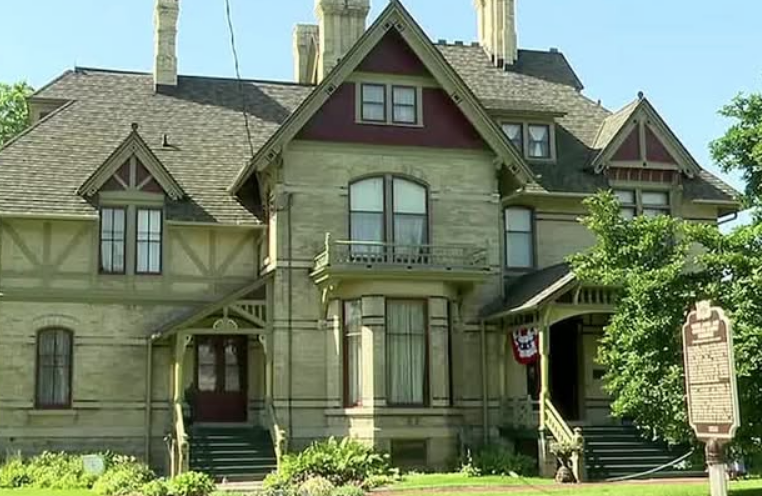
The Vulcan Street Plant became the first central hydroelectric station in the world. It used a water wheel to turn an Edison “K” type dynamo. This machine produced enough electricity to light two paper mills and the Rogers home. The house, now known as Hearthstone, became the first residence in the world to be lit by a centrally located water-powered plant.
The early days of the plant were messy and often unpredictable. There were no meters to measure how much power people used. Customers simply paid a flat rate based on how many lamps they owned. The voltage was also incredibly hard to control because the river did not always flow at a steady pace. When the water wheel spun too fast, the light bulbs grew blindingly bright and burned out. When the river slowed, the rooms went dark. Workers often had to judge the brightness of the bulbs by sight to decide if the system needed adjustment.

No spin or clickbait in this four minute update.
Safety was another hurdle. Wires were strung through the air with almost no insulation. Early users reported seeing sparks fly near the equipment, and the wooden walls of the mill were a constant fire risk. Because the technology was so new, there were no fuses to protect the circuits. If a wire shorted out, the whole system could fail or catch fire.
News of the “Appleton Experiment” spread quickly beyond the Fox River Valley. At the time, the press treated it as a marvel of modern engineering. Local newspapers and national trade journals covered the story, drawing visitors from across the country. Engineers and businessmen traveled to Appleton to see if the “white coal” of falling water could actually replace steam.
The success of the Vulcan Street Plant proved that Edison’s incandescent bulbs were more than just a novelty for big cities. It showed that any town with a river could generate its own power. This realization sparked a rush to build similar plants across the United States and Europe. Within a few years, hydroelectric dams began appearing on rivers from the Pacific Northwest to the Alps.
This single Wisconsin building changed how the world viewed natural resources. It proved that the future of power could be renewable. While the original plant was eventually replaced by larger stations, its impact remains. The project set the standard for the modern utility industry. It showed that electricity could be a public service rather than a laboratory miracle.
Today, a replica of the original plant stands in Appleton. It serves as a reminder that the digital world began with a simple water wheel in a Wisconsin mill town.
For further information:
American Society of Civil Engineers