America’s First Rail-Trail
In 1965, Wisconsin purchased 32 miles of abandoned Chicago & North Western Railway line between Elroy and Sparta. Opening to the public in 1967, it became the first official rails-to-trails conversion in the United States, proving that disused transit corridors could be converted into long-distance recreational trails.
Key Features and Tunnels
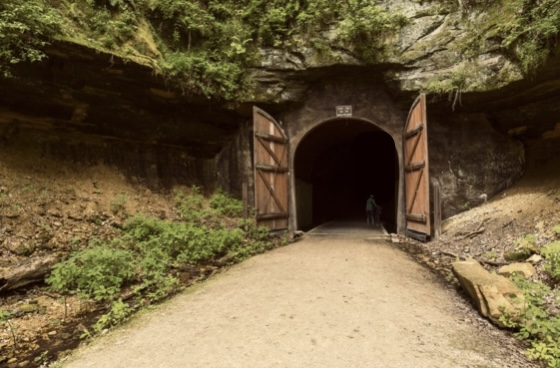
The route’s defining landmarks are three hand-carved stone tunnels built in the 1870s, located near Kendall, Wilton, and Norwalk. Tunnel No. 3 is the longest, stretching 3,810 feet (nearly three-quarters of a mile). Because the unlit stone tunnels stay cold and dark year-round—with temperatures averaging 50°F in midsummer—riders are required to walk their bikes through them with flashlights.
The original 32-mile path cuts through the valleys, wetlands, and bluffs of southwestern Wisconsin’s Driftless Region. Over time, state officials connected the path to three other rail-trails—the La Crosse River, Great River, and 400 State Trails—creating an interconnected, 101-mile crushed-limestone trail system.
Logistics and Trail Rules
- Permits: A Wisconsin State Trail Pass is required for all cyclists aged 16 and older.
- Surface: Screened limestone. Hybrid, gravel, or touring bicycles handle the terrain better than narrow road tires.
- Services: Restored wooden train depots in Kendall, Wilton, and Norwalk provide water, parking, and restrooms. The Kendall Depot acts as the trail’s headquarters.
- Trail Safety: Flashlights or headlights are necessary for all three tunnels. Riders should expect wet, dripping conditions inside the rock cuts regardless of weather.