By George Mitchell
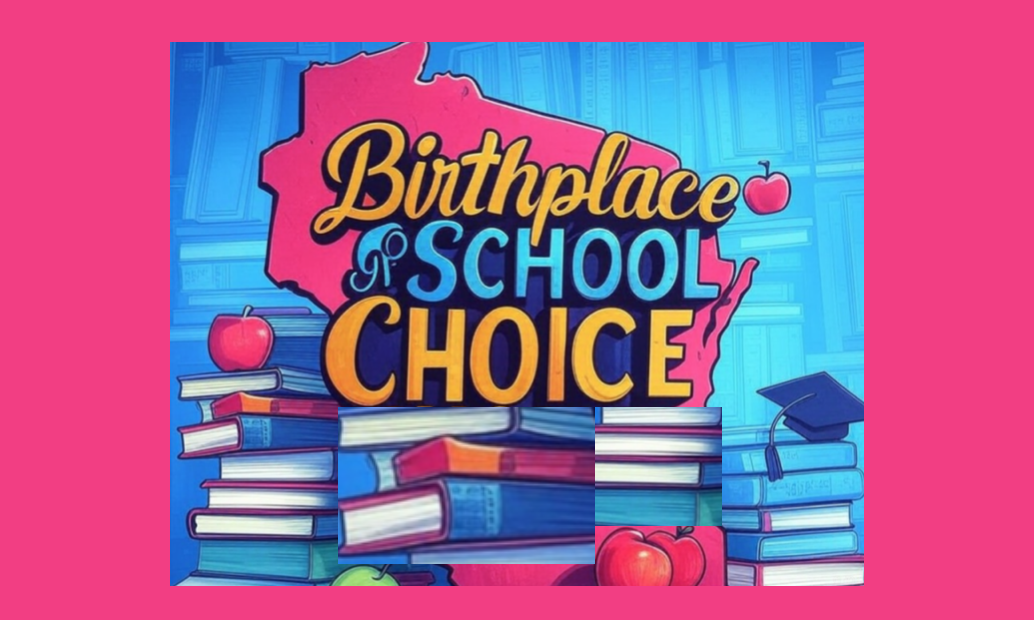
The July edition of a respected scholarly journal includes major findings regarding the academic achievement of students in the Racine and statewide private school choice programs.
For the four school years between 2018-19 and 2022-23, Wisconsin scholars gained access to English/Language Arts state test results. This previously unreported data base allows for a comparison between private choice students and public school peers.
Over the four-year period, the findings show a typical choice student will demonstrate a full year of additional academic gain when compared to a public school student.
No spin or clickbait in this four minute update.
“Private School Choice and Student Performance in English/Language Arts: Evidence from Wisconsin’s Parental Choice Programs,” published in the July issue of the Journal of School Choice, was authored by Scott Niederjohn, Ph.D., & William Flanders, Ph.D. Dr. Niederjohn is a widely-published professor of Economics at Concordia University in Mequon. Dr. Flanders holds a doctorate degree political science from Florida State University, He is Research Director at the Wisconsin Institute for Law & Liberty and has authored numerous reports on Wisconsin education issues.
The Journal of School Choice subjects submitted articles to extensive peer-review. Its decision to publish reflects independent corroboration of methods used by Niederjohn and Flanders.
While Milwaukee’s private school choice program has been the subject extensive scholarly examination, the new study is the first to look at the Racine program and the statewide program that serves students outside of Milwaukee. (The data base analyzed by Niederjohn and Flanders will be the subject of separate research on the Milwaukee program and charter schools in Wisconsin.)
Per the new study:
“This study used data from the Wisconsin Department of Public Instruction, including all students in tested grades across sectors in Wisconsin schools during the 2018–2019 school year and the 2022–2023 school year. For analysis, we required that students have a score on the DPI’s exam in English/Language Arts (ELA) for both 2018–2019 and 2022–2023. We focus on a four-year time frame…because most existing research on school choice suggests longer- term exposure is necessary for benefits to accrue, if they accrue at all.”
The authors describe in detail the methods used to compare choice students to “similar students in the public sector over the same time period, thereby capturing relative differences in achievement growth during and after the pandemic.”
The study concludes that its “results provide evidence that participation in Wisconsin’s private school choice programs is positively associated with improved academic performance as measured by the Wisconsin Forward English Language Arts test…[P]rivate school choice is related to achievement gains in both the [statewide] and [Racine] programs. In the statewide program, it took at least 3 years of exposure to school choice for statistically significant gains to occur.”