Wisconsin’s Public Records Law begins with one of the strongest declarations of open government in the nation.
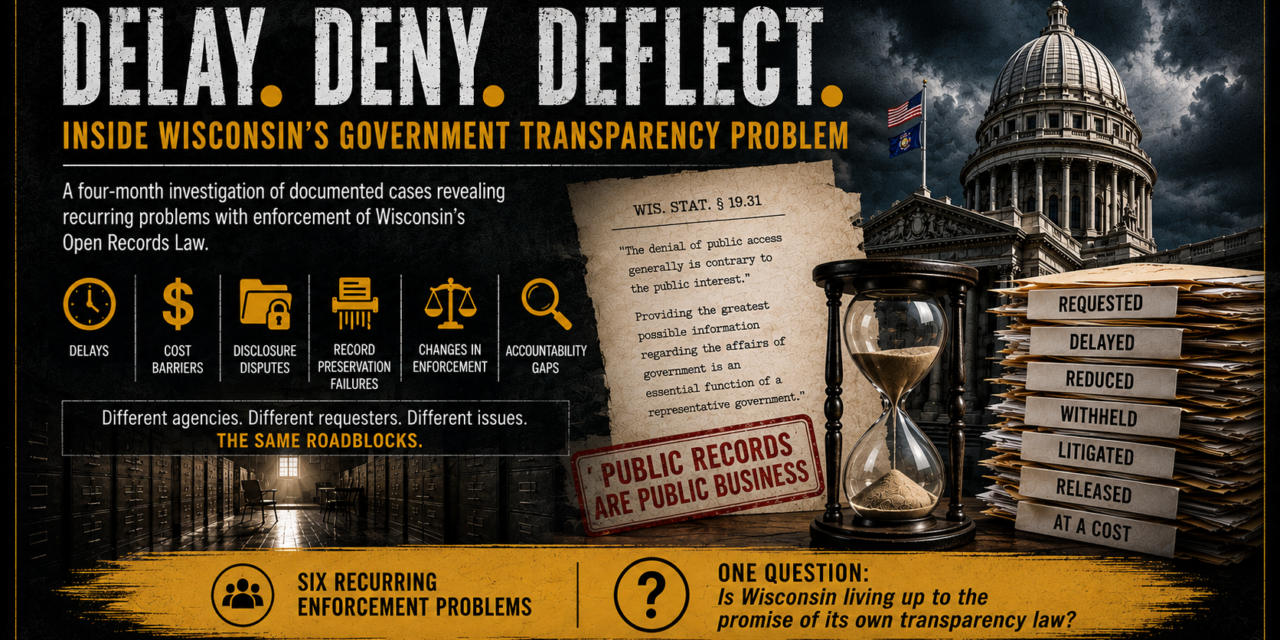
“The denial of public access generally is contrary to the public interest,” the Legislature declared in Wis. Stat. § 19.31.
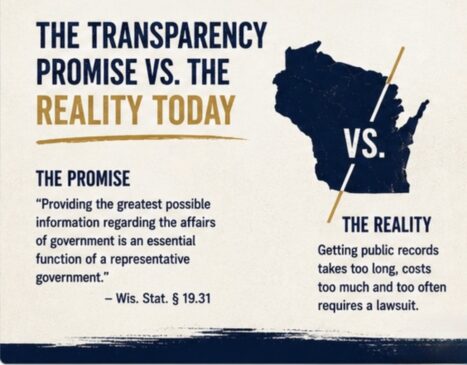
The law goes even further, declaring that providing “the greatest possible information regarding the affairs of government” is “an essential function of a representative government.”
Those aren’t aspirations. They’re the law.
Whether Wisconsin is living up to that promise is another matter.
This investigation didn’t start with a theory. It started with a records request.
In January 2025, Dairyland Sentinel requested records from the Wisconsin Department of Public Instruction related to its June 2024 Forward Exam standard-setting workshop at Chula Vista Resort in Wisconsin Dells.
We expected records.
Instead, we found a much bigger story. It took more than a year, and it still isn’t over. Along the way, the records revealed spending, contracts, and internal practices that had never been publicly examined.
It inspired us to dig deeper and take a broader look at government transparency in Wisconsin. Over the next four months, Dairyland Sentinel reviewed press accounts, court opinions, appellate decisions, lawsuits, settlements, agency correspondence, public records and documented disputes involving Wisconsin state government dating back to late 2021.
The deeper we dug, the more familiar the stories became.
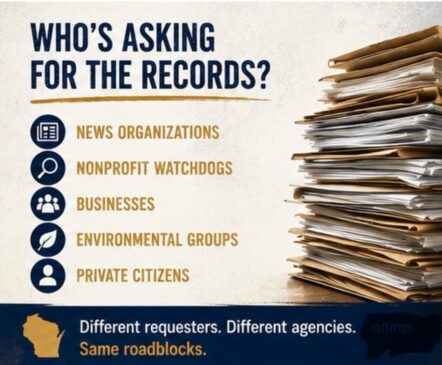
Different agency. Different requester. Different issue. Yet, the same roadblocks kept showing up.
Some requests sat for months, others for more than a year.
Some produced five-figure cost estimates, others ended in court before records were released.
Still others reshaped Wisconsin law through appellate decisions or settlements that forced agencies to change how they handle records requests.
Standing alone, every dispute is different.
Together, they tell a story that is difficult to ignore.
This isn’t an attempt to catalog every public records dispute in Wisconsin.
What follows is a documented cross-section of recurring enforcement problems spanning multiple state agencies, multiple statewide offices, multiple administrations and requesters from across Wisconsin’s political spectrum.
Those requesters include Dairyland Sentinel, Wisconsin Manufacturers & Commerce, the Wisconsin Institute for Law & Liberty, the Badger Project, Invisible Institute, American Oversight, Wisconsin Right Now and Midwest Environmental Advocates.
These entities disagree on a host of public policies.
But many of them encountered remarkably similar obstacles while trying to obtain public records.
The examples that follow reveal six recurring enforcement problems:
- Delays.
- Cost barriers.
- Disclosure disputes.
- Record preservation failures.
- Changes in enforcement.
- Accountability gaps.
We were looking at a pattern that served as a roadblock to transparency.
Before going further, one point is worth making.
This is a long story.
It has to be.
No single lawsuit, records request or court decision can explain what has happened to Wisconsin’s Open Records Law. That’s why Dairyland Sentinel spent four months reviewing court opinions, agency records, settlements and litigation involving multiple agencies and multiple requesters.
Readers won’t find every public records dispute here.
But they will find enough documented examples to understand why this investigation grew from a single records request into a much broader examination of how Wisconsin’s transparency law is enforced.
DELAYS
Wisconsin’s Public Records Law does not give agencies a fixed deadline to respond to records requests. Instead, it requires custodians to respond “as soon as practicable and without delay.” Those seven words appear simple enough, but in practice, they have become the subject of some of Wisconsin’s most significant public records litigation.
Example 1: Wisconsin Department of Justice and Wisconsin Manufacturers & Commerce
Wisconsin Manufacturers & Commerce submitted a public records request to the Department of Justice on March 28, 2022, seeking records related to PFAS litigation.
DOJ acknowledged receiving the request on April 25.
The agency did not formally deny the request until Sept. 27, 2023.
By then, nearly 18 months had passed.
WMC sued.
The case eventually reached the Wisconsin Court of Appeals, which concluded that Wisconsin’s Public Records Law regulates more than an agency’s final decision. An unreasonable delay in responding to a records request, the court said, may itself violate the law even if the agency ultimately denies the request.
That was a significant clarification.
The court recognized something requesters had argued for years: delay can become its own form of denial.
Sources
Wisconsin Court of Appeals opinion
Wisconsin Department of Justice Public Records Guide
Example 2: Dairyland Sentinel and the Department of Public Instruction
This investigation began here.
On Jan. 21, 2025, Dairyland Sentinel requested records from the Department of Public Instruction related to its June 2024 Forward Exam standard-setting workshop at Chula Vista Resort in Wisconsin Dells.
The request wasn’t unusual.
We asked for contracts, invoices, communications, attendee information and other records explaining how the workshop was organized, who participated and how taxpayer money was spent.
Then we waited.
And waited.
As the months passed, our reporting changed direction.
The records request became part of the story.
Throughout 2025, Dairyland Sentinel repeatedly followed up with DPI seeking updates.
The records remained incomplete.
Nearly one year after the original request, the Institute for Reforming Government sent a formal demand letter asserting DPI had failed to respond “as soon as practicable and without delay.”
Additional records were eventually produced.
Those records became the basis for multiple Dairyland Sentinel investigations.
They documented at least $368,885 in taxpayer spending for lodging, meals, meeting space, vendor services and related expenses.
They also showed participants signed nondisclosure agreements before taking part in discussions establishing proposed Forward Exam performance standards.
Whether DPI ultimately complied with Wisconsin law is a legal question.
The timeline isn’t.
More than a year passed between Dairyland Sentinel’s request and the production of significant additional records.
For an investigation about public records, that delay became a story of its own.
Sources
Institute for Reforming Government demand letter
Example 3: Wisconsin Parole Commission
In May 2022, Wisconsin Right Now requested records from the Wisconsin Parole Commission related to parole decisions involving convicted murderers.
According to court filings, the commission did not produce the requested records.
Months passed.
Wisconsin Right Now filed suit.
On Oct. 6, 2022, a Dane County judge signed an alternative writ directing the commission to either produce the records or explain why it had not done so.
The order did not determine whether every requested record ultimately had to be released.
It did determine the dispute deserved the court’s attention.
Like the WMC case, the litigation wasn’t simply about whether records would eventually be released.
It was about whether requesters should have to go to court to get an answer in the first place.
Sources
Wisconsin Institute for Law & Liberty
Example 4: Office of Special Counsel
The longest-running public records litigation examined during this investigation grew out of former Wisconsin Supreme Court Justice Michael Gableman’s investigation into the 2020 election.
American Oversight filed multiple lawsuits seeking records from the Office of Special Counsel.
At first, the fight centered on records that had not been produced.
Eventually, it became something else.
Questions arose about whether some public records had been preserved at all.
Those issues resulted in a February 2024 settlement addressing document-retention practices. According to the settlement, the Office of Special Counsel acknowledged that the destruction of certain public records violated Wisconsin law and agreed to changes in its records retention policies.
A delayed record can still be released.
A destroyed record cannot.
That’s why record preservation matters every bit as much as record production.
Sources
Four disputes involving different agencies, different records, different requesters and different administrations.
One involves environmental litigation, another statewide testing. another parole decisions, and another an election investigation.
The facts aren’t the same and the delays aren’t identical. But they all arrived at the same place: The courts.
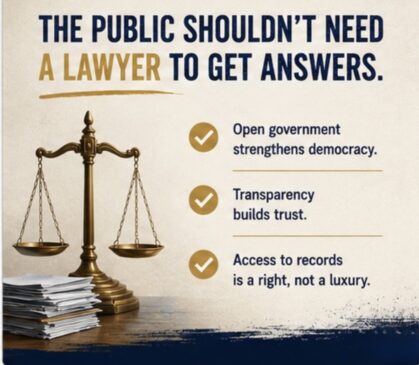
That isn’t where Wisconsin’s Public Records Law is supposed to begin. But the expensive and time-consuming legal process is now the arena by which the public must rely for government transparency. The delay and the chilling effect that comes at the prospect of retaining legal counsel is keeping the truth of government activities from the public.
COST
Not every public records dispute is about delay.
Sometimes an agency agrees records should be released.
The fight becomes what it will cost to get them.
Wisconsin law allows agencies to recover certain actual, necessary and direct costs associated with responding to records requests.
Supporters say taxpayers should not have to subsidize unusually burdensome requests.
Critics counter that large estimates can effectively price citizens, nonprofit organizations and small newsrooms out of exercising a right the law is supposed to guarantee.
One pending lawsuit puts that issue squarely before the courts.
Example 5: Department of Public Instruction and the Wisconsin Institute for Law & Liberty
On Aug. 13, 2025, the Wisconsin Institute for Law & Liberty requested records from the Department of Public Instruction involving denied educator license applications.
According to the complaint, DPI identified approximately 1,381 responsive records.
WILL narrowed the request.
The estimate didn’t shrink.
It grew.
According to court filings, DPI initially estimated the cost of producing the records at approximately $17,007.
After the request was narrowed, the agency issued a revised estimate of approximately $34,014.
On June 30, 2026, WILL sued, alleging the estimate exceeded what Wisconsin law allows agencies to charge and effectively denied access to the requested records.
The lawsuit is pending.
DPI will have the opportunity to defend its estimate in court.
Whatever the outcome, the numbers themselves are not disputed.
A request that had already been narrowed carried an estimated price tag of more than $34,000.
For many citizens, nonprofit organizations and local news outlets, that amount would effectively end the request before the first page was produced.
Sources
DISCLOSURE
Delay and cost are two obstacles.
The next disputes asked a different question.
What records belong to the public in the first place?
Example 6: DOJ, the Badger Project and the Invisible Institute
The Badger Project and the Invisible Institute requested records identifying certified Wisconsin law enforcement officers, including employment histories maintained by the Wisconsin Department of Justice.
DOJ argued portions of the information should remain confidential, citing privacy and security concerns.
The requesters argued the records were necessary for public accountability.
A Dane County judge largely agreed with the requesters.
In April 2026, the court ordered DOJ to release records identifying approximately 16,000 certified law enforcement officers and their employment histories.
The ruling did more than resolve a single records dispute.
It confirmed that information maintained by the state about thousands of sworn law enforcement officers is subject to Wisconsin’s Public Records Law unless a specific exception applies.
Once again, the final answer came from a courtroom.
Sources
Example 7: Frederick Prehn’s text messages
When Wisconsin enacted its Public Records Law, government business was conducted through letters, memoranda and paper files.
Today, it often happens through text messages.
That change landed in the Wisconsin Court of Appeals after Midwest Environmental Advocates sought text messages related to public business from former Natural Resources Board Chairman Frederick Prehn.
The appellate court concluded that communications about public business do not lose their status as public records simply because they are sent or received on a personal device.
The court also rejected the argument that producing records during litigation automatically ended the case, allowing portions of the lawsuit to continue.
Government changed. The statute didn’t. Government communications evolved. The law has failed to catch up.
The courts have increasingly been asked to decide how Wisconsin’s decades-old transparency statute applies to modern forms of communication.
Sources
Wisconsin Court of Appeals opinion:
The disclosure disputes are different from the delay cases.
No one argued these requests simply took too long.
The disagreement was over whether the records belonged to the public at all.
Again, it took litigation to answer the question.
RECORD PRESERVATION
A delayed record may eventually be released.
A record that no longer exists cannot.
That distinction became central to one of Wisconsin’s highest-profile public records disputes.
Example 8: Office of Special Counsel record preservation
The litigation involving the Office of Special Counsel did not end with disputes over producing records.
It expanded into questions about preserving them.
American Oversight alleged records created during former Justice Michael Gableman’s election investigation had not been properly retained.
The litigation ultimately ended in a February 2024 settlement.
According to the settlement, the Office of Special Counsel acknowledged that destruction of certain public records violated Wisconsin law and agreed to changes in its document-retention policies.
The settlement did more than resolve a lawsuit.
It underscored something easy to overlook.
Wisconsin’s Public Records Law cannot provide access to records that no longer exist.
The public’s right to inspect records depends on agencies preserving them in the first place.
Sources
ENFORCEMENT
The previous examples focused on agencies responding to records requests.
The next example changed the rules governing how citizens enforce those requests.
Example 9: Friends of Frame Park
For years, successful public records requesters could often recover attorney fees when litigation caused government agencies to release records.
In 2022, the Wisconsin Supreme Court narrowed that path.
In Friends of Frame Park, U.A. v. City of Waukesha, the court held that a requester generally must obtain a judicially sanctioned change in the legal relationship between the parties before attorney fees may be awarded.
The decision did not change Wisconsin’s policy favoring open government.
It changed one of the principal ways citizens have historically enforced that policy.
Supporters argued the court faithfully applied existing legal standards.
Open government advocates warned the ruling could reduce the incentive for agencies to promptly resolve disputes once litigation begins.
Whatever one’s view of the decision, its impact on public records litigation has been significant and continues to shape how courts evaluate attorney fee claims.
Sources
Wisconsin Supreme Court opinion
One theme has surfaced repeatedly throughout this investigation.
Wisconsin’s Public Records Law strongly favors public access.
Again and again, however, requesters found themselves relying on judges to define, clarify or enforce rights the statute already recognizes.
That doesn’t mean every requester prevailed.
It doesn’t mean every agency acted unlawfully.
It does mean the courts have become an increasingly important part of Wisconsin’s open records system.
ACCOUNTABILITY
The final two examples are different.
They do not center on a single lawsuit or appellate decision. Instead, they raise a broader question.
How does Wisconsin know whether its own transparency law is working?
Example 10: DOJ’s own response-time data
The Wisconsin Department of Justice instructs government agencies to respond to public records requests “as soon as practicable and without delay.”
DOJ also tracks and publishes its own public records response times.
Those reports, along with independent reporting, show some requests have remained pending for years.
One request cited by the Wisconsin Law Journal remained open for 1,706 days.
DOJ’s own reports also show response times can vary dramatically depending on the nature and complexity of the request.
Some requests involve thousands of pages, privileged material or complex legal review. The larger issue is different.
DOJ measures and publishes its own response times.
Most other state agencies do not publicly report comparable data. That makes it difficult for citizens, lawmakers and taxpayers to compare agency performance or determine where delays have become routine.
Sources
DOJ response-time reports:
https://www.wisdoj.gov/Pages/AboutUs/records-response-times.aspx
Wisconsin Law Journal:
https://wislawjournal.com/2026/05/27/wisconsin-doj-takes-years-to-fulfill-public-records-requests/
Example 11: Litigation sometimes became the only path
The Badger Project requested records from the Wisconsin Department of Transportation concerning a former State Patrol officer. The publication did not receive the records.
It sued. Less than two weeks later, WisDOT released the requested records and agreed to pay approximately $1,300 in attorney fees.
Standing alone, it is one lawsuit. Placed alongside the other documented disputes examined during this investigation, it reinforces a recurring reality.
Again and again, requesters obtained records, settlements or changes in agency practices only after litigation or the credible threat of litigation.
One lawsuit proves very little. But we now see a pattern, that deserves this closer examination
Sources
The Badger Project:
https://thebadgerproject.org/2025/08/14/wisdot-releases-records-pays-legal-fees-after-lawsuit-from-the-badger-project/
WHAT FOUR MONTHS REVEALED
When Dairyland Sentinel filed its first public records request last January, we expected one story. We found something much larger.
Over the last four months, Dairyland Sentinel reviewed court opinions, appellate decisions, lawsuits, settlements, agency correspondence, public records and documented disputes involving multiple state agencies, multiple administrations and multiple requesters.
No single dispute proves Wisconsin’s Open Records Law is failing. No single lawsuit establishes a statewide pattern. But taken together, several documented examples examined in this investigation reveal recurring enforcement problems that cannot easily be dismissed as isolated incidents.
Across different agencies, different administrations and different requesters, the same obstacles surfaced again and again.
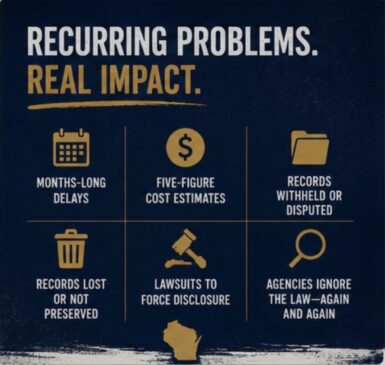
Requests stretched into months and, in some cases, more than a year. Production estimates climbed into the tens of thousands of dollars. Records were produced only after lawsuits were filed or the credible threat of litigation emerged.
Questions that once might have been resolved between a records custodian and a requester increasingly ended up before judges. Whether those outcomes resulted from similar decisions reached independently by agencies or for other reasons, the practical effect has been the same.
For ordinary citizens, journalists, businesses and watchdog organizations, Wisconsin government is becoming harder to examine.
Obtaining public records increasingly takes more time, costs more money and requires greater persistence than the Legislature envisioned when it declared that providing “the greatest possible information regarding the affairs of government” is “an essential function of a representative government.”
That declaration remains the law.
So does the Legislature’s finding that denying public access generally is “contrary to the public interest.” Yet the documented record assembled in this report points to an enforcement system that increasingly places the burden on citizens, journalists, businesses and public interest organizations to fight for access through repeated follow-up, expensive litigation and prolonged delays.
That is not how Wisconsin’s Open Records Law was intended to function.
The Legislature did not enact the law to make access contingent on persistence, finances, legal resources or the willingness to file suit. It enacted the law because open government serves the public interest.
The issue is not whether every requester should win every dispute. They shouldn’t.
The issue is whether obtaining public records should routinely require months of waiting and/or thousands of dollars of litigation before Wisconsin government fulfills obligations already imposed by state law.
Five years of documented disputes suggest Wisconsin is drifting away from that principle.
The law itself remains one of the strongest statements of government transparency in the nation. Its enforcement tells a different story. The costs associated with legal action serve as a barrier to true transparency.
That growing gap between legislative intent on open records and everyday practice by government agencies is making Wisconsin government less transparent, less accountable and more difficult for the people of this state to examine.
Help us get the information about government that you deserve