
Part 3
Wisconsin in America at 250: Kitchens, Ink, and the Dairy Revolution
The transformation of America during its first two centuries did not just take place in major rail hubs or heavy machinery plants. It occurred inside the walls of the American home—in the way families cooked, how they handled household sanitation, how they communicated, and the very food they put on their kitchen tables.
The third installment of our series looks at four Wisconsin pioneers who took everyday domestic and agricultural challenges and turned them into massive commercial and cultural shifts, permanently altering daily life across the nation.
William D. Hoard
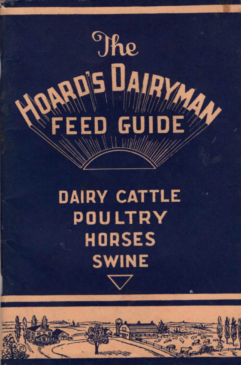
Hoard’s Dairyman – Fort Atkinson
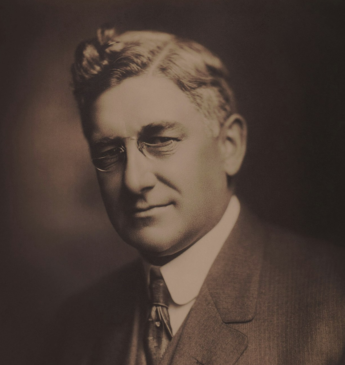
By the 1870s, Wisconsin agriculture was in a state of crisis. Farmers had spent decades exhausting the soil by growing single crops of wheat year after year, leaving fields depleted and vulnerable to pests. William D. Hoard, a passionate agricultural journalist and future Wisconsin governor, recognized that the state needed a complete structural shift to survive. He found the answer in the dairy cow.
Through his influential magazine, Hoard’s Dairyman, founded in Fort Atkinson in 1885, Hoard launched a tireless campaign to professionalize and modernize farming. He did not just advocate for cows; he advocated for science. He lectured on the necessity of single-purpose dairy breeding, the clinical testing of milk, the use of sub-surface silos to store winter feed, and the cultivation of alfalfa to restore nitrogen to the soil.
Hoard’s persistent advocacy earned him the title of the “Father of American Dairying.” His work completely re-engineered the state’s economy, turning a bankrupt wheat territory into the undisputed capital of American cheese and milk production.
George Safford Parker
Parker Pen Company – Janesville
In the late 1880s, George Safford Parker was working as a telegraphy teacher in Janesville. To supplement his modest income, he took a side job selling and repairing fountain pens for his students. At the time, fountain pens were notoriously unreliable instruments; they leaked constantly, failed to feed ink smoothly, and frequently ruined clothing and legal documents. Parker spent his evenings taking the faulty pens apart, determined to fix their mechanical flaws.
In 1889, he patented his first fountain pen design, followed five years later by his historic “Lucky Curve” ink feed system. The Lucky Curve utilized capillary attraction to draw excess ink back down into the reservoir when the pen was upright in a pocket, preventing the ink from pooling and leaking out of the nib.
Parker founded the Parker Pen Company in Janesville, transforming Rock County into the fine writing instrument capital of the world. For nearly a century, Janesville-built pens were used to sign historic treaties, write global literature, and handle the daily correspondence of millions of people worldwide, proving that a premium, precision-engineered tool could be built right in central southern Wisconsin.
John W. Hammes
InSinkErator – Racine
The city of Racine has long been an epicenter for practical, backyard engineering. In 1927, a local architect named John W. Hammes was looking at the messy, unsanitary reality of household food waste management. At the time, dealing with kitchen scraps meant storing rotting garbage in indoor bins until it could be hauled outside, creating a constant battle against odor and pests. Hammes believed there was a mechanical solution to eliminate food waste immediately at the source.
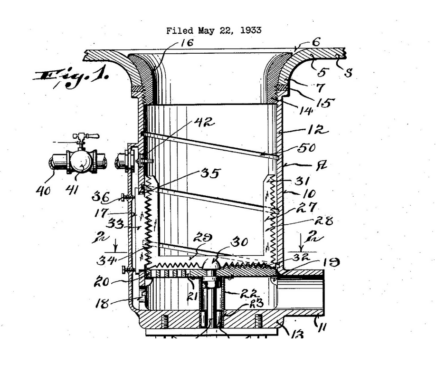
Working out of his basement workshop, Hammes designed a small, sheet-metal device containing a high-speed motor and rotating grinding elements. Placed directly beneath the kitchen sink drain, the machine pulverized food scraps into microscopic particles that could be safely washed away through the municipal sewer system.
Hammes spent years perfecting the water seals and vibration controls before patenting his invention in 1933 and founding the InSinkErator company. His invention of the practical garbage disposal completely revolutionized residential sanitation, permanently changing modern kitchen architecture and urban waste management across the globe.

Lizzie Black Kander
The Settlement Cook Book – Milwaukee
Innovation is not always forged in iron or cast in steel; sometimes it is born out of social necessity and community leadership. At the turn of the 20th century, Milwaukee was experiencing a massive influx of European immigrants. Lizzie Black Kander, a dedicated Milwaukee social reformer and president of the Settlement house, recognized that food and domestic literacy were powerful tools for cultural transition, nutrition, and economic independence.
To teach young immigrant women cooking, sanitation, and household management, Kander compiled the recipes and home-ec lessons into a single text. When the Settlement board refused to fund the printing costs, Kander raised the money herself through local advertising sales. Published in Milwaukee in 1901, The Settlement Cook Book: The Way to a Man’s Heart became an instant, runaway sensation.
The book went through more than forty editions and sold millions of copies nationwide, becoming the definitive guide to American home cooking and kitchen management. Crucially, Kander structured the operation so that every penny of the book’s massive corporate profits went directly back into funding the Settlement house, neighborhood clinics, and community infrastructure in Milwaukee. Her venture proved that a community-driven educational tool could scale into a national commercial powerhouse while serving the public good.
Previously at Dairyland Sentinel