By Brian Fraley, Dairyland Sentinel
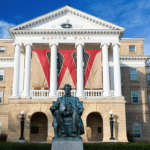
The University of Wisconsin-Madison has yet to fulfill a high-profile 2023 agreement with state lawmakers to hire a professor dedicated to “conservative political thought,” despite the university receiving hundreds of millions of dollars in state funding as part of the deal.
According to a report by The College Fix, the university remains in a holding pattern, offering the same status updates today as it did more than a year ago. The position was a central condition of an $800 million funding compromise between the UW System Board of Regents and the Wisconsin State Legislature. Under the terms of that deal, the university received $347 million for a new engineering building and employee pay raises in exchange for freezing diversity, equity, and inclusion (DEI) positions and establishing the conservative-leaning endowed chair.
Asked about the status of the position, a campus official gave the exact same answer he provided last year to The College Fix.
“UW–Madison continues to actively work on the creation of an endowed chair in conservative political thought,” spokesman John Lucas told The Fix via email.
He said university officials “don’t have other updates to share at this time,” repeating what he told The Fix in February 2025.
However, Lucas did say “the university has hired multiple scholars with a broad range of perspectives, including those who self-identify as conservative.”
Lucas did not clarify the timeline for the university’s hiring process, define which steps the school has taken since the agreement was made, or list which organizations they reached out to identify candidates or secure funding.
As previously reported by Dairyland Sentinel, a new report from the Tommy G. Thompson Center on Public Leadership reveals a significant ideological gap among faculty at the University of Wisconsin–Madison. The study, released March 8, 2026, found that 70% of tenured and tenure-track faculty identify as liberal, while only 9% identify as conservative.
According to the report, this imbalance extends beyond personal belief into professional evaluation. “Significant minorities of faculty would be less likely to hire a candidate who expressed a conservative view on topics such as immigration, abortion, affirmative action, or transgender sports participation,” the executive summary states.
The risk of expressing controversial views appears higher for those on the right. While few faculty reported institutional consequences overall, the report found a clear disparity in how those consequences are distributed.
“Conservative faculty who do express views report experiencing institutional consequences—such as warnings from administrators—at substantially higher rates than liberal faculty who express views,” the study noted.