
Breese Stevens, 100 years as a gem in the heart of Madison
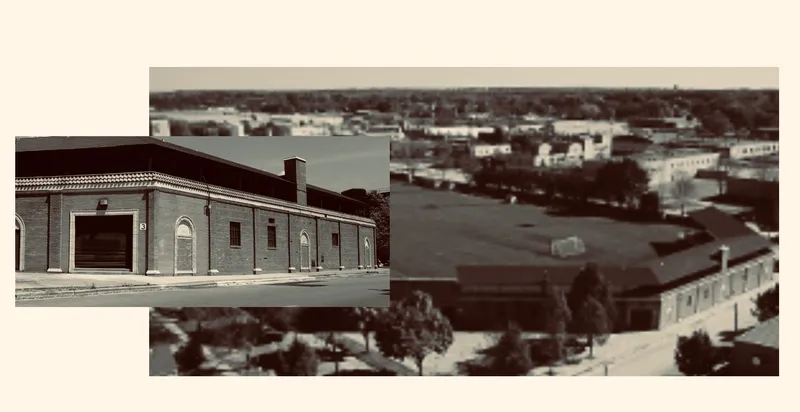
Breese Stevens Field opened May 5, 1926, with Gov. John Blaine throwing out the first pitch. A century later, it’s still packing people onto East Washington Avenue.
The city bought the block in November 1923 from the widow of former Mayor Breese J. Stevens for $35,000. That’s not a bad price for a whole city block on the isthmus. Madison hired the local firm Claude and Starck, which designed a brick grandstand in the Mediterranean Revival style.
Mayor Albert Schmedeman asked businesses to close at 3:30 on opening day so people could go to the game. Nearly 4,000 showed up. Blaine threw the first pitch to Schmedeman, who played catcher for the ceremony. Then the Madison Blues lost to the Beloit Fairies 7-5, according to the field’s National Register nomination.
Follow this story every morning.
Get Key Reads, our free daily email: the Wisconsin news that matters, in four minutes or less.
Lights and stone walls
Floodlights went up in 1931 at a cost of $29,100. For decades it was the only lighted field in Madison.
In late 1933, crews from the federal Civil Works Administration, one of the first New Deal jobs programs, started building the concrete bleachers and the sandstone wall that wraps the block. The stone is said to have come from the old city quarry at Hoyt Park. The work wrapped up in March 1934, and that wall is still the first thing you notice when you drive by.
Everything happened here
For years, Breese Stevens was where Madison went for anything outdoors. East, Central, Edgewood and Wisconsin High played football there. The field hosted track meets, boxing, wrestling, ice skating, circuses, concerts, church services and drum and bugle corps shows. Midget car racing ran on a cinder track from 1938 until 1940, when high school coaches complained it was tearing up the field.
Jesse Owens came through after the 1936 Olympics, when he was making a living racing horses at fairs and ballgames. He raced a thoroughbred on the Breese Stevens track.
Minor league baseball came and went. The Madison Blues of the Three-I League, a Cubs farm team, played there from 1940 until World War II shut the league down.
Almost torn down
By the late 1960s, schools had newer stadiums and the old field sat empty more often than not. The city let it go. In 1981, the Parks Department budgeted $60,000 to knock down the grandstand.
Madison wouldn’t have it. The public outcry was strong enough that the city spent the money fixing the place instead. Crews repaired the grandstand and the walls, pulled out the cinder track and the baseball diamond and planted grass over the whole thing. In 1982, Breese Stevens became a soccer field, and it has been one ever since.
The city made it a Madison landmark on Oct. 16, 1995. It went on the National Register of Historic Places in 2015.
A second life
Big Top Events, the company behind the Madison Mallards, took over running the field in 2015 and started booking concerts. In May 2018, the City Council approved a 10-year deal with the company and about $1.3 million in upgrades, according to Forward Madison FC.
Forward Madison FC played its first season there in 2019. On a summer night, with the pink flamingos out and the supporters section going, it’s as loud as it’s ever been.
Dairyland Sentinel follows a published Editorial Policy, Ethics Statement and Corrections Policy.
Start tomorrow as Wisconsin’s best-informed reader.
The Wisconsin news that matters, in four minutes or less.
Already a subscriber? Support this reporting with a tax-deductible gift.