Department’s median response time increased from 14 days in 2025 to 58 days during the first half of 2026
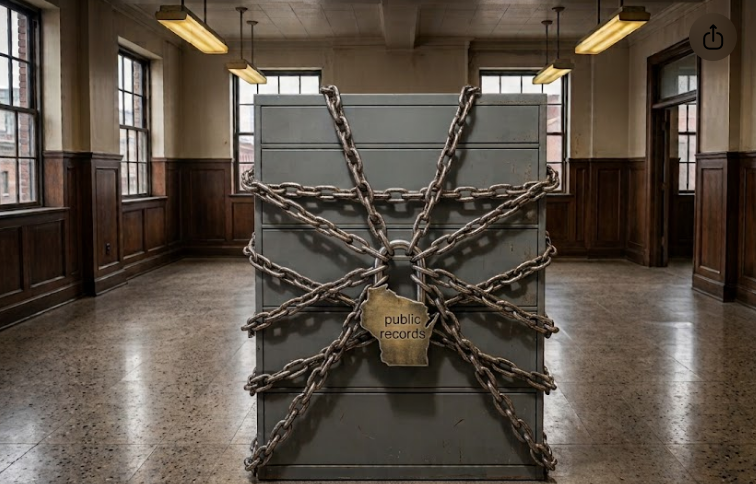
The Wisconsin Department of Justice’s median public records response time jumped from 14 calendar days for requests completed in 2025 to 58 days during the first half of 2026.
Attorney General Josh Kaul is asking lawmakers for more staff that he says could help reduce the delays.
Kaul highlighted the request in a Wisconsin Freedom of Information Council candidate questionnaire released Oct. 1.
“My administration requested that 2.6 positions for public records staffing for DOJ be included in the 2025-27 state budget,” Kaul wrote. “The addition of those positions would have resulted in more DOJ staff time being available to promote and obtain compliance with the public records and open meetings laws.”
The positions were not included in the current budget. Kaul said his administration has made the same request for the upcoming 2027-29 budget.
“Additional resources could help DOJ reduce response times to public records requests,” he wrote.
DOJ’s published reports also show the average response time increased from 58 days to 101 days over those two reporting periods.
The department completed 1,165 requests in 2025, the highest annual total it has reported. Approximately 53% were answered within DOJ’s 10-working-day guideline, according to its year-end report.
During the first half of 2026, DOJ completed 545 requests, 35 fewer than during the same period in 2025. About 25% were answered within 10 working days. DOJ said many of the requests were complex and required time-consuming reviews.
The department’s midyear report shows the problem persists.
Response times remained elevated in August. DOJ completed 75 requests with a median response time of 56 days and an average of 93.83 days. Twenty-one were completed within 10 calendar days. Thirty-one took more than 100 days, including one request that remained open for 490 days.
Wisconsin law does not impose a single deadline on every public records request. DOJ’s compliance guide says 10 working days is generally reasonable for a simple request involving a limited number of easily identifiable records. Larger or more complicated requests can lawfully take longer.
The law requires authorities to respond “as soon as practicable and without delay.”
DOJ’s pending-request list dated Sept. 28 contained 658 unresolved requests. The oldest, seeking Division of Criminal Investigation records, was opened Feb. 22, 2021. Other pending requests date to 2022, 2023 and 2024.
The list is a weekly snapshot, not a complete measurement of DOJ’s workload. It excludes requests received and completed between publication dates, along with some requests involving officer-involved critical incidents and other categories.
No enforcement case since 2004
The Office of Open Government does more than process requests for DOJ records. It provides training and legal guidance, reviews complaints and works with state and local authorities to obtain compliance with Wisconsin’s public records and open meetings laws.
The Freedom of Information Council’s questionnaire states that DOJ has not filed an enforcement case under either law since 2004. The question cited the litigation that led to the Wisconsin Supreme Court’s 2008 decision in State v. Beaver Dam Area Development Corp.
Kaul did not dispute that statement.
He said DOJ should evaluate possible enforcement on a case-by-case basis while accounting for its limited resources. He said the department should continue seeking voluntary compliance for unintentional violations.
“In a case involving an egregious, intentional violation, an enforcement action should be considered,” Kaul wrote.
He did not define what would qualify as an egregious and intentional violation or identify a case during his tenure that met that threshold.
DOJ has remained active in other areas of open-government compliance. During the first half of 2026, the office issued 53 guidance letters, responded to 55 inquiries through its public records and open meetings help line, and participated in four training sessions or educational presentations.
The department does not publish a comprehensive report showing how many complaints it receives, how each one is resolved, how often an authority complies after DOJ intervenes or how frequently DOJ concludes that a violation occurred.
The enforcement question has direct relevance to Dairyland Sentinel’s reporting.
In March, Dairyland Sentinel asked Kaul to review the Department of Public Instruction’s handling of records requests involving its 2024 Forward Exam standard-setting process. The request followed delays in obtaining records about a $368,885 workshop at Chula Vista Resort and DPI’s contract with its testing vendor. His office reminded DPI of their obligation, and the Department did turn over some of the records soon thereafter.
In July, Dairyland Sentinel called for state agencies to disclose the number of requests they receive and close, their response times, their oldest pending requests, fees charged and the number of disputes that result in litigation.
Toney did not answer questionnaire but has gone on record
Republican attorney general candidate Eric Toney did not answer the Freedom of Information Council’s 2026 questionnaire.
In his 2022 response to the Council, Toney said he would “apply sufficient resources and prioritize the proper administration and enforcement” of the public records and open meetings laws.
“When elected, openness and transparency will be a priority for my office,” he said at the time.
The council also reported that Toney told the Milwaukee Journal Sentinel earlier this year that he would prioritize DOJ staffing.
The Freedom of Information Council disclosed one unresolved question about DOJ’s published performance data. The organization said it originally planned to ask the candidates about average response times during Kaul’s tenure but changed the question after identifying a discrepancy in Office of Open Government reports.
The discrepancy “could not be immediately resolved,” the council wrote. It did not describe the discrepancy, identify the reports involved or say whether it affected the accuracy of DOJ’s current figures.
Kaul said state agencies should follow DOJ’s practice of publishing information about their responses to public records requests. DOJ currently publishes completed-request response times and weekly snapshots of pending requests.
However DOJ does not publish case-by-case information about the complaints it receives against other government authorities or the results of its interventions. Kaul’s questionnaire response also did not identify specific response-time or enforcement goals that would accompany the 2.6 additional positions.
Previously at Dairyland Sentinel