So, which Fish Fry are we having tonight?
It’s a common question in our state, especially on Fridays. Especially, but not exclusively, in the springtime.
Roots
The Wisconsin fish fry is a beloved tradition with deep historical and cultural roots, particularly tied to the state’s religious heritage, immigrant influences, and geographic advantages. Its origins can be traced back to the practices of European Catholic settlers, especially those of German and Polish descent, who arrived in Wisconsin in large numbers during the 19th century. These communities brought with them a religious custom of abstaining from warm-blooded meat on Fridays, a practice rooted in medieval Christian traditions to honor the crucifixion of Jesus on Good Friday. Fish, being cold-blooded, was an acceptable alternative and is not considered meat in the traditional sense. Add Wisconsin’s proximity to Lake Michigan and its abundance of freshwater lakes provided a ready supply of species like perch, walleye, and bluegill and a delicious tradition was born.
This religious custom laid the groundwork, but the fish fry as a widespread social tradition gained momentum in the early 20th century, particularly during Prohibition (1920–1933). With alcohol sales banned, taverns across Wisconsin turned to serving inexpensive fried fish dinners to attract customers and stay afloat financially. The plentiful and cheap local fish made this a practical choice, and some establishments reportedly offered free fish with the purchase of a beer, likely served discreetly to skirt the law. This era cemented the connection between fish fries and taverns, blending the Catholic tradition with a growing social ritual that paired fried fish with beer, a nod to the state’s strong German brewing heritage.
The tradition evolved further in the mid-20th century. After World War II, when meat rationing heightened the appeal of fish, and into the 1950s and ’60s, supper clubs (our iconic Wisconsin dining establishments) began offering all-you-can-eat or family-style fish fries. This shift broadened the tradition’s reach beyond Catholic communities, making it a statewide Friday night staple for people of all backgrounds.
The relaxation of Catholic meat abstinence rules in 1966, limiting the practice to Lent, didn’t diminish the fish fry’s popularity. By then, it had transcended its religious origins to become a year-round cultural institution, celebrated in taverns, supper clubs, churches, and even fast-food chains like Culver’s.
Newcomers Guide to the Wisconsin Fish Fry
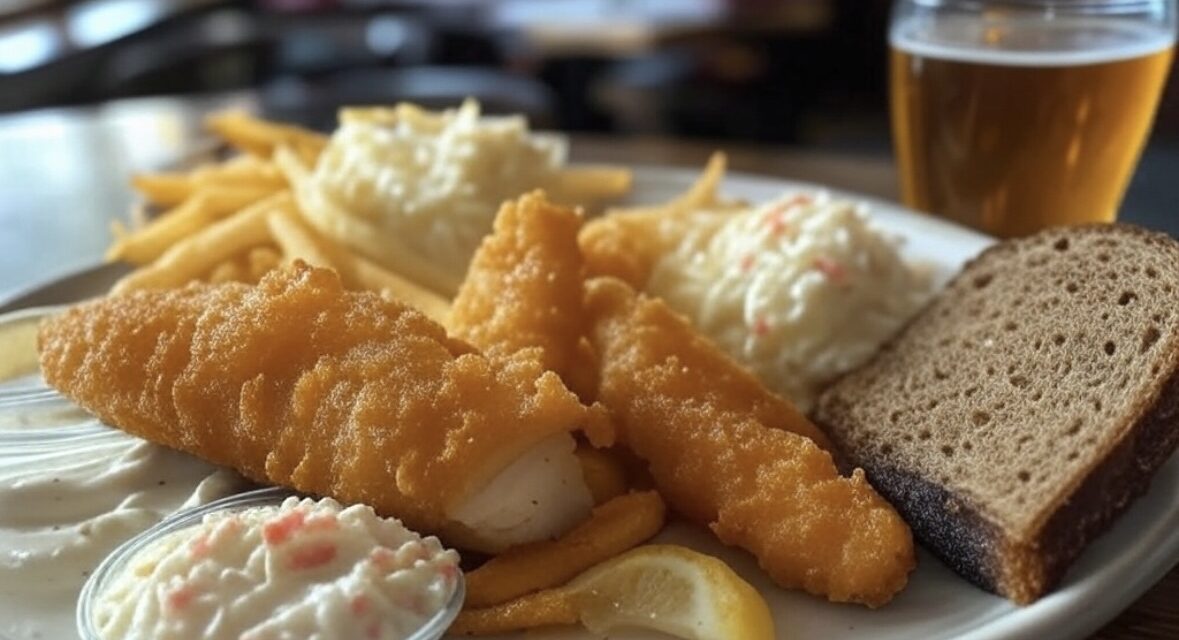
If you’re new to the Friday ritual, here is the breakdown of what hits your table. The star of the show is almost always beer-battered or breaded. Usually it is cod, but true locals often hunt for perch, walleye, or bluegill. During the spring, keep an eye out for smelt. If you’re near the Mississippi River, you might even find catfish on the menu.
Portions are generous. They range from a standard three-piece plate to the “all-you-can-eat” marathons famous at our neighborhood supper clubs. You will usually choose between standard French fries or a stack of potato pancakes. If you go with the pancakes, they are traditionally served with applesauce to cut through the savory crunch.
A scoop of creamy, tangy coleslaw is a requirement for that cool contrast. You will also find a slice of rye, specifically marble rye if the establishment is old school, slathered in butter. It is a direct nod to our German roots. Tartar sauce is the MVP here. It is usually heavy on the pickles and dill. Add a quick squeeze of a lemon wedge over the fillets and you are set.
In some spots, especially church basements, you might see baked beans or macaroni salad. However, the core fish and sides combo is the undisputed king. It is simple and satisfying. In true Wisconsin fashion, it is best paired with a cold beer or Old Fashioned.
The Fish Fry is simple, satisfying, and deeply tied to the state’s culture. Everyone is welcome!
So, which Fish Fry are we having tonight?
The first version of this column was originally published March 6, 2025
We publish a free summary of Wisconsin economic, civic, and cultural news every weekday morning.

Sign up for our 4 minute weekday updates!