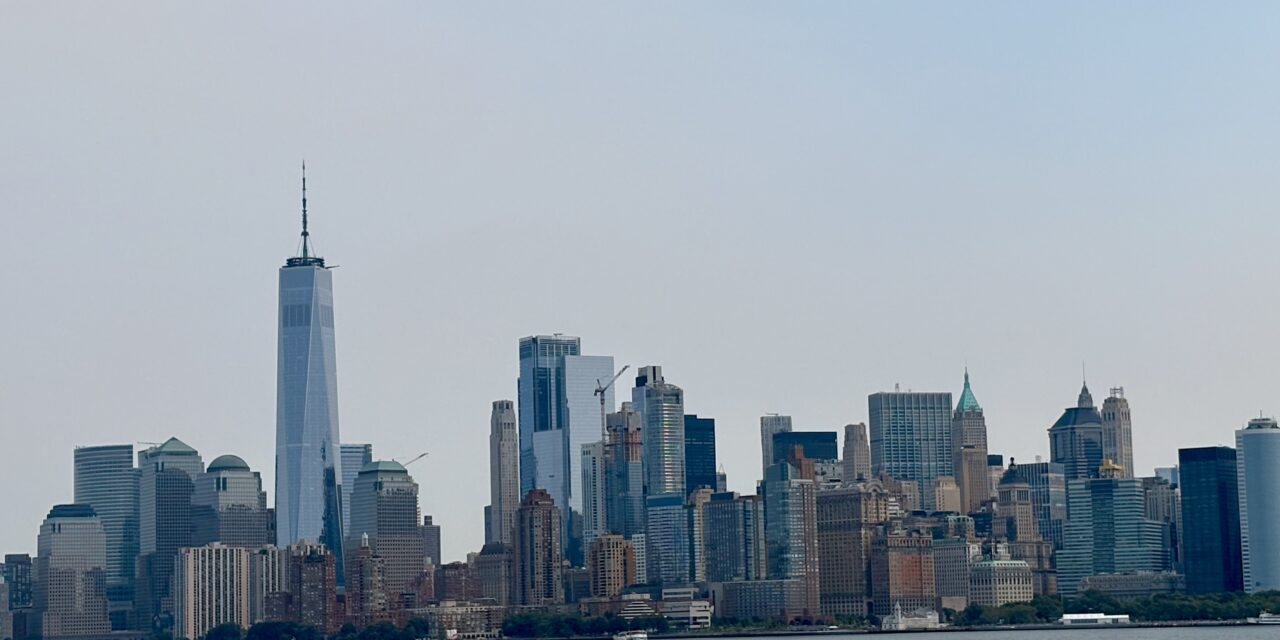
Twenty-five years later, I still think about how to honor 9/11.
That is not because I have nothing to say. It is because I know there is nothing particularly special about my perspective. Nothing I write here has not been said before, more eloquently, by people who lived through far more than I did.
I’m just a guy in his late 50s from Wisconsin. I’m a husband. A father of two girls. On September 11, 2001, I was nowhere near New York, Washington or Shanksville.
And yet, like millions of Americans, I know that day belongs to my story, too.
I struggle every year with how to keep the anniversary meaningful, memorable and reverent without allowing remembrance to harden into bitterness or turn into another political argument.
Some things should not be complicated.
We were attacked.
People were murdered.
It was awful.
We know nearly 3,000 people were killed in the attacks at the World Trade Center, the Pentagon and aboard Flight 93. They were parents and children, husbands and wives, friends and co-workers. Firefighters, police officers and other first responders died trying to save people they had never met.
And the dying did not simply end when the fires went out.
Responders, recovery workers and survivors have lived with serious physical and mental health consequences for decades. The federal World Trade Center Health Program and private charities now serves tens of thousands of responders and survivors affected by 9/11.
Those facts should sober us. We should not gloss over them.
I still remember.
I recognize my connection to the day is mostly one of distance. My wife’s is not.
She is from New Jersey. She could see the haze from the smoke at ground zero from her college campus in Upstate New York. She, her family and their neighbors knew people who died that day. They know people who rushed toward the pile afterward, trying to help.
I have friends who were in Washington that awful Tuesday morning and experienced the attack on the Pentagon from a proximity I cannot pretend to understand.
So I am careful not to make their experience mine.
But I also reject the idea that September 11th was something that happened only to New York, Northern Virginia or western Pennsylvania.
It happened to America.
The attacks were physical acts of mass murder, but their target was larger than four airplanes or three locations. They were a terrorist attack on the United States and on the broader ideals of Western civilization: representative government, pluralism, religious freedom, individual liberty and the right of ordinary people to live their lives without surrendering to terror.
I am not interested here in relitigating every foreign policy decision that followed. There are legitimate debates about wars, intelligence failures, national security powers and the decisions made by Republicans and Democrats over the last quarter century.
Some will want to push an agenda or pet causes or justify the unjustifiable. Debate is part of who we are as a country. But not here in this column. Not this week. Seek that acrimony elsewhere if you must.
What I find myself missing, especially as the years pile up, is something harder to describe. Call it the spirit of September 12th.
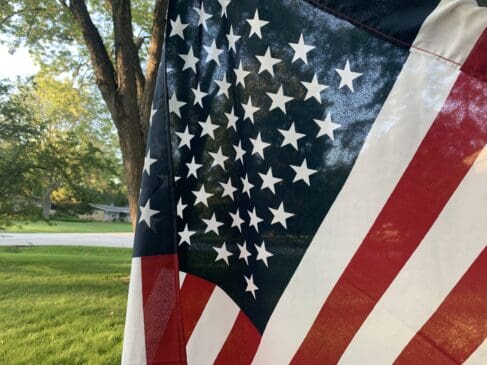
For a brief period, Americans seemed to understand that whatever divided us, there were things more important than politics. Flags appeared everywhere. American flags. People thanked firefighters. Strangers talked to one another. Neighbors checked on neighbors. Churches filled. People prayed for people they did not know, and would never meet. There was a renewed appreciation for the country itself, not because anyone suddenly believed America was perfect, but because people understood that it was ours and it was worth respecting, appreciating, and for many, worth fighting for.
I still remember.
Sure, some of that unity was temporary. Some of it was probably romanticized even then. But it was real. The yellow ribbon magnets eventually faded. Many of the American flags came down. Politics returned, as politics always does.
Twenty-five years later, our divisions can feel deeper and more personal than they did before. I cannot fix that, but I am not helpless. I can do something smaller, but nevertheless important.
I can make sure my daughters know what happened on September 11, 2001. I can make sure they understand that “Never Forget” is not a slogan printed on a bumper sticker or flashed across a meme. It is an obligation to remember actual people, actual families and actual sacrifice.
I can teach them to honor the dead and those who ran toward danger that morning to help.
I can remind them to respect the firefighters, police officers, paramedics and members of our military who still choose lives of service.
And I can tell them that for all of our political dysfunction, failures and disappointments, the United States remains a remarkable country, imperfect and argumentative, but still a beacon of freedom and possibility to millions around the world.
That may sound old-fashioned. So be it. I’m a guy from Wisconsin who doesn’t mind old-fashioned values.
This is neither a lecture, nor a call to action. People will do what they will.
So, why write this?
Twenty-five years after September 11th, I still remember, and I intend to make sure my children do, too.