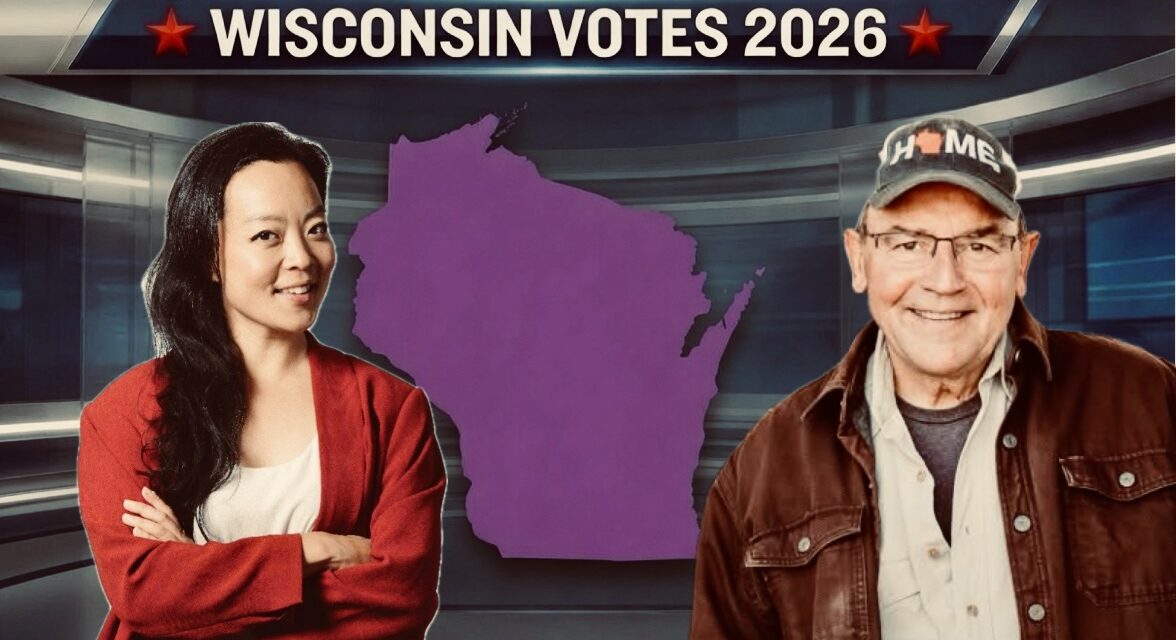
Campaign finance controversies. Candidates dropping out and getting back in. Polls. One lone statewide televised debate. Power rankings. Big endorsements. Tweets. Previously undisclosed Democratic Party investigations.
The Democratic primary for Governor of Wisconsin has lurched from one dramatic moment to the next over the past few weeks.
But as the dust begins to settle, one constant remains.
Economic anxiety.
The latest poll from the Institute for Reforming Government suggests that’s the campaign Wisconsin is actually about to have. Read beyond the horse race and a different story emerges. Both campaigns are reading the same electorate. Both have almost certainly seen the same themes in their own private polling that the rest of us see in the public surveys.
Wisconsin voters are worried about the economy.
That’s where the agreement ends.
Tom Tiffany says families are struggling because government has lost its way. Francesca Hong says families are struggling because the economy itself has. The next three months won’t be spent convincing voters life has become harder. They’ll be spent convincing voters whose explanation, and whose solution, they trust.

Barring a political collapse unlike anything we’ve seen this cycle (and we’ve seen a lot), Hong will be the Democratic nominee for governor. That means it’s time to start paying attention to the election Wisconsin is actually about to have.
Open-seat races are different. Without an incumbent asking voters for another four years, campaigns spend less time defending a record and more time defining the future. Voters, meanwhile, ask a simpler question.
“Who understands what my family is going through?”
The latest IRG poll offers a pretty clear answer to what is driving those voters.
The survey found 82 percent of Wisconsin voters consider affordability a very important issue. Thirty-eight percent identified inflation and the cost of living as the biggest problem facing the state, more than twice the next closest issue. Housing costs continue climbing the list of concerns, particularly among younger voters. At the same time, roughly two-thirds of respondents said the next state budget should either hold spending where it is or reduce it, while nearly three-quarters supported eventually eliminating Wisconsin’s income tax.
The Marquette University Law School Poll has been pointing in much the same direction for months. Candidate standings moved as the Democratic primary unfolded. Economic concerns didn’t. Regardless of which Democrat respondents supported, the cost of living consistently remained among the issues weighing most heavily on Wisconsin voters.
Neither campaign is guessing. Both have their own polling data that undoubtedly says the same thing. The candidates know what voters are worried about. Both are building a strategy around the same reality.
The disagreement isn’t over whether economic anxiety is real. It’s over why.
Hong argues the economy is a rigged system that has increasingly favored those with wealth and influence while working families absorb rising costs for housing, health care, child care and everyday necessities. She drove the Primary’s policy discussions with broad attacks on the inequalities of Capitalism. Her campaign calls for fundamentally changing the state’s spending priorities and investing more aggressively in services provided to the working class.
Tiffany accepts the same underlying reality that Wisconsin families are struggling financially. His explanation is different. He has framed his campaign as a choice between what he calls his common sense and her chaos. He argues government has become too expensive, too bureaucratic and too detached from the everyday lives of working families. His prescription is lower taxes, restrained spending, regulatory reform and economic growth.
Those are competing visions for Wisconsin.
They’re also competing explanations for the same problem; and fundamentally, that’s the election we’re about to watch.
The Democratic primary generated plenty of headlines, and deservedly so. David Crowley’s exit and sudden return. Sara Rodriguez’s implosion and withdrawal. Barnes’ exit after Politico reported Democratic officials expected damaging information about him to become public. Campaign finance stories. Tony Evers’ late-in-the/game endorsement. Debate reviews. Polls.
Interesting? Absolutely. Lord knows I opined here and elsewhere about what each development meant for that contest.
Was anything that happened over the last night months decisive? Probably not.
Campaign consultants will now spend the next three months dissecting fundraising reports, advertising buys, polling crosstabs, social media posts, online chatter and debate performances. Most Wisconsin families will not. They will spend those same three months buying groceries, paying utility bills, filling the gas tank, anticipating their rent or property tax bills and wondering why life still feels harder than it should.
Most polls tells us who was leading a few days ago.
The IRG poll tells us what the next three months are going to be about, and that’s why I think it’s the most interesting dataset released this month. It sets the stage.
The candidate who best articulates Wisconsin’s economic anxiety, and persuades voters that his or her solution is the better one, will become Wisconsin’s next governor.
Fraley is the publisher of Dairyland Sentinel.

Previously