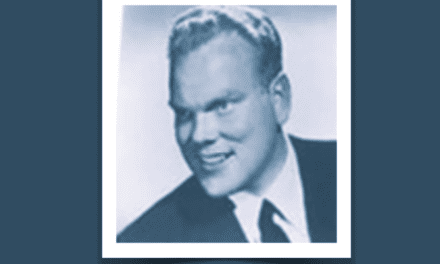

Long before the NFL became a polished, corporate machine, it belonged to roguish free spirits like John Victor McNally—better known across the sporting world as Johnny “Blood.”
Born in New Richmond, Wisconsin, on November 27, 1903, McNally didn’t pick up his famous alias from an admiring roommate or an aggressive hit. In 1924, he and a friend, Ralph Hanson, wanted to pick up some extra cash playing semipro ball in Ironwood, Michigan, without blowing their remaining college eligibility. Walking past a Minneapolis theater displaying a marquee for Rudolph Valentino’s bullfighting flick Blood and Sand, McNally had an epiphany. He turned to Hanson and declared, “You be Sand. I’ll be Blood.” Hanson washed out shortly after, but the name Johnny Blood stuck for life.
His road to Green Bay wasn’t a clean collegiate path, either. McNally bounced through Saint John’s University, Notre Dame, and the University of Minnesota. At Notre Dame, legendary coach Knute Rockne had little patience for his late-night carousing and campus high jinks, and McNally never made a mark on Rockne’s varsity squad. By the time Curly Lambeau signed him to the Packers in 1929, McNally was already a battle-tested NFL veteran who had spent four seasons barnstorming with the Milwaukee Badgers, the Duluth Eskimos, and the Pottsville Maroons.
In Green Bay, the “Vagabond Halfback” became a sensation. He was a slippery open-field runner, a lethal deep receiver, and an electric kick returner who seemed to thrive in chaotic situations. McNally anchored the Packers’ historic three-peat title run from 1929 to 1931, playing alongside iron men like Cal Hubbard, Mike Michalske, and Arnie Herber.
Off the gridiron, he was an intellectual daredevil: a bohemian eccentric who quoted Lord Byron and William Shakespeare, hopped moving freight trains, balanced along third-story hotel window ledges, and spent money as fast as he made it. He regularly tested Lambeau’s curfew and patience, but his knack for pulling off improbable, game-saving plays kept him in the lineup.
McNally’s Green Bay run didn’t end in 1934. After playing a year with the Pittsburgh Pirates, he returned to Green Bay for the 1935 and 1936 seasons, picking up a fourth championship ring in 1936. He eventually took over as player-coach in Pittsburgh from 1937 to 1939, served in the Army Air Forces during World War II, and finally returned to Saint John’s to finish his degree in 1946. In 1963, he was inducted into the Pro Football Hall of Fame as part of its inaugural charter class. He died on November 28, 1985, leaving behind a legacy as one of football’s most gifted and unrepentant originals.
For more, see: