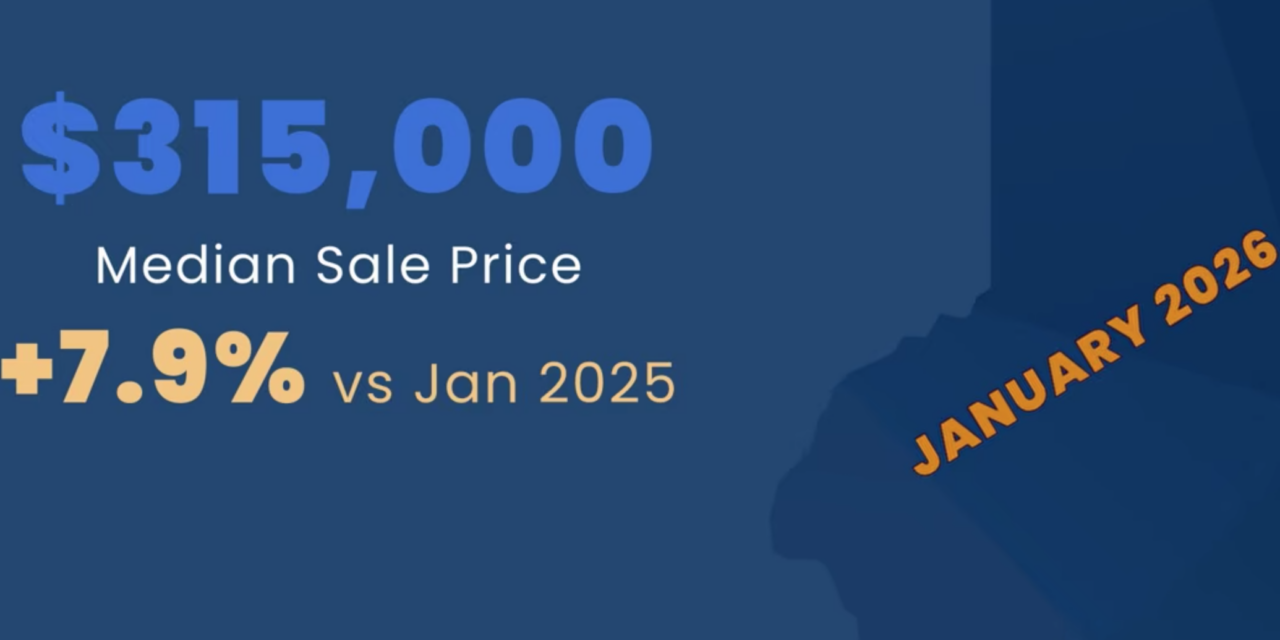
MADISON, Wis. — Wisconsin’s housing market began 2026 with fewer homes for sale and rising prices, according to new data from the Wisconsin REALTORS® Association. Existing home sales in January fell 3.9 percent compared with the same month last year, while the statewide median price increased 7.9 percent to $315,000.
Tom Larson, the association’s president and CEO, said affordability has improved as mortgage rates eased. “The spike in mortgage rates that began in 2022 saw rates topping out over 7 percent, and as a result, affordability fell to record‑low levels. We really didn’t start seeing improvement until the middle of last year. Since June 2025, the 30‑year fixed mortgage rate has fallen by nearly three quarters of a percent to 6.1 percent, and the Wisconsin Housing Affordability Index has increased nearly 16 percent. Hopefully these improvements in affordability continue.”
New listings dropped 11.3 percent from January 2025 levels, contributing to a 1.7 percent decline in total listings. Months of inventory fell to 2.9 months, which the association said reflects a strong seller’s market.

Five of the state’s six regions recorded annual price gains. The Northeast led with an 11 percent increase, followed by the Southeast at 10 percent. The South Central region rose 6.8 percent, the Central region 6.5 percent and the West 4.5 percent. Prices in the North region were essentially unchanged.
Sales performance varied by region. The Southeast saw a 12.8 percent decline in sales and the West dropped 9.9 percent. The North region posted the strongest growth at 8.2 percent. The Central region rose 4.3 percent. The Northeast and South Central regions increased between 1.3 and 2 percent.
Dave Clark, professor emeritus of economics and a consultant to the association, said demographic shifts could ease supply pressures in the coming years. “We currently have very limited supply in the housing market, but we do expect significant improvement in the next five years due to the aging of a key demographic group: baby boomers. The youngest boomers are now 62 years old, and the oldest just turned 80. Moreover, according to a 2025 survey conducted by the National Association of REALTORS, boomers accounted for the largest share of both
The average 30‑year fixed mortgage rate fell from 6.96 percent in January 2025 to 6.10 percent in January 2026. The Wisconsin Housing Affordability Index rose 2.2 percent to its highest point since January 2024.
Amy Curler, chair of the association’s board of directors, said the January decline in total listings breaks a long‑running trend. “Total listings grew on an annual basis for 28 straight months before declining in January. We suspect this is just a temporary deviation from the trend, and we’re cautiously optimistic that the spring and summer markets will see growing inventories.”
buyers (42 percent) and sellers (53 percent) of homes. As those in this demographic cohort continue to age, their propensity to buy homes will diminish, and their propensity to sell will increase, thereby releasing inventory for younger generations.”