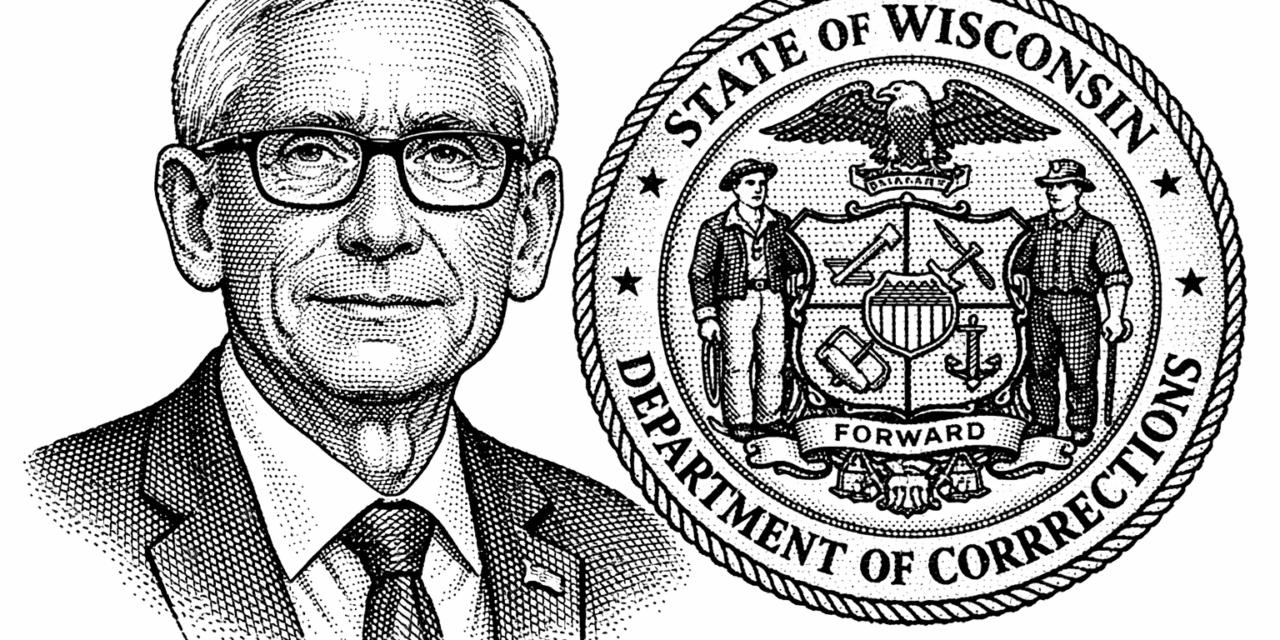
Madison – Gov. Tony Evers and the Wisconsin Department of Corrections on Wednesday celebrated what the administration described as the completion of court-ordered reforms at Lincoln Hills and Copper Lake Schools and said DOC is now asking a federal court to end the consent decree that has governed the troubled youth facilities since 2018.
“This has been a goal a decade in the making, and it’s tremendous to be able to celebrate the completion of reforms at Lincoln Hills and Copper Lake schools today,” Evers said.
DOC Secretary Jared Hoy called it “a key moment in Wisconsin’s efforts to reform juvenile corrections,” adding that the work since 2017 is aimed at “a new model that prioritizes education, therapy, and strengthening family and community ties.”
But the state’s announcement also lands in the middle of a longer, messier reality. Lincoln Hills and Copper Lake were slated for closure years ago, and Wisconsin’s corrections system continues to face high-profile problems during Evers’ tenure including staffing shortages, lockdowns, and investigations tied to deaths and alleged neglect in adult facilities.
A troubled history that predates Evers and lingered through his two terms as governor
The press release traces the origins of the crisis back to the Walker administration era, describing a 2015 law enforcement raid and a pattern of complaints that culminated in state and federal findings of excessive use of force, pepper spray, solitary confinement, and failures to investigate allegations of sexual misconduct.
In 2018, advocates said the Legislature passed a bill to close Lincoln Hills and Copper Lake by Jan. 1, 2021 and to replace them with smaller regional facilities. That deadline was not met. Under Evers, the state continued operating the facilities while working under the consent decree framework and trying to build replacement secure juvenile facilities, a process that has stretched across multiple budgets and political fights over funding and locations.
The press release itself acknowledges the long timeline and the remaining work. “Ending the consent decree marks a step in the right direction… but our work is not done,” Evers said.
Reforms achieved, but safety concerns have not disappeared
The court appointed monitor’s assessment quoted in the release points to specific changes including the elimination of pepper spray, the removal of punitive room confinement, the reduction of restraint usage, and a stronger emphasis on staff wellness. The monitor concluded that “these measures have produced a demonstrable improvement in the safety, climate, and culture of the facilities.”
Those improvements reflect reporting from Wisconsin Public Radio describing reduced use of solitary confinement and mechanical restraints tied to the monitor’s work and the consent decree requirements.
Even with that progress, serious incidents persisted. A 2024 monitor report noted that Youth Counselor Corey Proulx died from injuries received in an assault at Lincoln Hills, and a youth was charged in the death.
The central promise still unfulfilled: closing Lincoln Hills and Copper Lake
For years, the political headline has been closure. The state has said it intends to end the era of large, remote youth prisons in favor of smaller regional facilities closer to youths’ home communities. In Wednesday’s release, the Evers administration said a new Type 1 secure juvenile facility in Milwaukee is expected to open this fall and that DOC is in final planning for a second Type 1 facility in Dane County funded in the 2025-27 budget.
At the same time, the release describes gaps in the current plan, including funding not approved for a northern Type 1 facility and partial funding for planning a Grow Academy expansion. That means Lincoln Hills and Copper Lake remain open years after the 2021 closure target described by advocates and lawmakers.
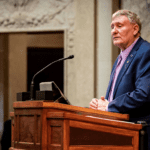
“I wish the Governor would listen to the court-ordered monitor and develop a long-term strategy for getting youth with serious mental health needs out of Lincoln Hills into the expanded Mendota Juvenile Treatment Center,” said State Senator Van Wanggaard. “That, along with the opening of the Racine and Milwaukee SRCCCY’s, the opening of the Milwaukee Type 1 Facility, and the construction of the Type 1 Facility in Dane County, I see no reason that Lincoln Hills cannot be closed by the end of the biennium, and we can put this sad chapter behind us.”
Evers’ broader prison policy goals and public safety debate
Even before he was elected, Tony Evers made reducing Wisconsin’s prison population a stated policy goal. During the 2018 gubernatorial campaign, then-candidate Evers said cutting the state’s prison population by half was a “goal worth accomplishing,” reflecting his view that the justice system should incarcerate fewer offenders and emphasize alternative approaches.
As governor, Evers has repeatedly pursued reforms intended to reduce incarceration through early release programs, restructuring proposals, and a broader emphasis on treatment and reentry support. His 2025-27 budget plan included proposals to reorganize the state’s prison system and reduce overall capacity by eliminating beds through reconfiguration of existing facilities.
Critics have raised concerns that aggressive population reduction goals could have unintended consequences for public safety, particularly if reductions occur without adequate investment in community supervision, victim services, and law enforcement resources. Republican lawmakers have argued that cuts in prison capacity without parallel public safety measures could strain already stressed facilities or lead to increased crime in local communities.
Costs and declining enrollment add pressure
Financial pressures have drawn scrutiny. Despite declines in counts at Lincoln Hills and Copper Lake, the state budget for those facilities rose from about $25.9 million in 2015 to $31.3 million by 2023, highlighting the fixed costs of staffing and infrastructure.
This has become another political fault line as the state tries to build new facilities while continuing to operate old ones.
The broader context: DOC struggles under Evers extend beyond youth facilities
Wisconsin’s adult corrections system has also faced chronic challenges during Evers’ tenure. In March 2024, the Associated Press reported that the adult prison system held more than 22,000 people, thousands over capacity, while guard vacancy rates exceeded 26 percent, contributing to lockdowns in multiple prisons.
Reuters reported in June 2024 that the warden of Waupun Correctional Institution and eight other employees were charged in connection with an investigation into inmate deaths, with law enforcement describing dangerous conditions inside the facility.
Staffing shortages remain a persistent issue across the system, with officials pointing to retention, training, safety, and workplace culture as ongoing concerns.
“For the last eight years, Republicans have been trying to close and convert Lincoln Hills, said Wanggaard. “In his first budget, Governor Evers sought to permanently delay the closing of Lincoln Hills without a comprehensive corrections plan. It took 7 years for him to present a plan.”
What the Administration claims and what remains to be seen
The Evers administration is asking a federal court to end the consent decree and said the ACLU is not opposing that request. If the decree ends, Wisconsin will soon face a critical test: whether the reforms are sustainable without court supervision while executing the long-delayed closure plan.
Evers framed the next phase as a statewide responsibility and renewed a call for legislative cooperation. “Now, it is our responsibility as a state to prove that these reforms are here to stay,” he said.
The last decade of headlines suggests why skeptics remain. Wisconsin has repeatedly declared a turning point at Lincoln Hills while the closure timeline has slipped, replacement facilities have moved slowly, and broader DOC operational problems have persisted under Evers despite recurring promises of reform.
Updated 2:35 pm on Jan 28, 2026 to include Senator Wanggaard’s comments