A Dairyland Sentinel Perspectives Column by Brian Fraley
“According to the nonpartisan Legislative Fiscal Bureau…”
Those have been attention-getting words in the Wisconsin Capitol for nearly six decades. They are uttered by insiders and would-be insiders to preface what legislators (and, by extension, the public) rely on in sorting through competing partisan claims about state government finance.
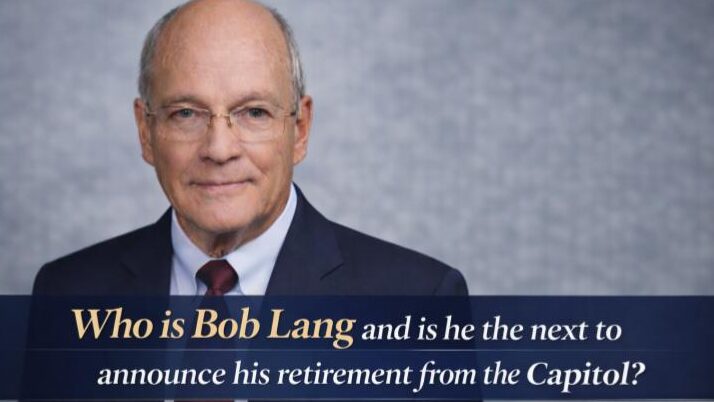
It’s not an overstatement to say short-hand for “According to LFB…” is “Bob Lang says….”
In a building defined by turnover, Lang has been the closest thing Wisconsin government has to a permanent fixture. Governors cycle through. Legislators rise and fall. Staff come and go. Lang has simply remained.
For more than five decades, Lang has occupied a role that most voters will never notice but every lawmaker understands. He joined the LFB in 1971. He became its director in 1977, succeeding the first director of LFB, Dale Cattanach. Since then, eight governors have proposed budgets under his watch. Hundreds of legislators have debated numbers his office produced.
While Lang, now 81, has not announced plans to step aside, time remains undefeated. I have not spoken to him in more than 15 years, so my speculation is not based on first-hand knowledge. However, the prospect of his eventual departure is less political gossip than mathematical inevitability. Mine won’t be the last column like this.

Just as it is with the departure of Assembly Speaker Robin Vos, whenever Lang decides to hang it up, the transition will be consequential.
Lang’s tenure is not merely long. It is generational.
When he arrived in Madison, Wisconsin’s two-year budget totaled roughly 5.8 billion dollars. Analysts worked without modern modeling software, without laptops, without the digital tools that now dominate fiscal work. The budget process was smaller, slower, and less numerically daunting.
That world no longer exists.
Wisconsin’s current biennial budget approaches 115 billion dollars across all funds. The document is larger, the revenue structures more complex, and the consequences of projection errors far greater. Where earlier analysts tracked billions, today’s Fiscal Bureau navigates tens of billions with federal funding streams, program formulas, and long-term obligations layered into nearly every decision. While the expansion of government is lamentable, the scale shift of the budget process is difficult to overstate.
Inside that environment, Lang’s position carries unusual importance. The LFB is the Legislature’s nonpartisan authority on budget math. It evaluates executive proposals, dissects agency requests, projects revenues, and staffs the Joint Committee on Finance. Lawmakers may disagree loudly on policy. They still require credible numbers to argue over.That is the bureau’s function. I’ve long argued too many lawmakers let LFB steer budgetary decision making, but given it’s stellar reputation, their reliance on the bureau is understandable.
Lang’s responsibilities extend beyond spreadsheets. He oversees analysts who translate sprawling budget documents into usable information. He shapes how legislators understand fiscal tradeoffs. He safeguards the bureau’s most valuable asset, its credibility. In a Capitol where nearly every actor is measured through a partisan lens, the Fiscal Bureau survives on trust in its math.
Experience matters in that equation.
Long serving staff have a form of institutional memory unavailable to new lawmakers. They remember why formulas changed, where budget pressures historically emerge, and how past projections performed under stress. That knowledge rarely attracts headlines. It routinely informs decisions involving billions of taxpayer dollars.
Replacing a Legislative Fiscal Bureau director is not a ceremonial change. It is the transfer of accumulated judgment developed across decades of budget cycles, economic swings, and policy shifts. The next director will inherit responsibility for guiding lawmakers through a budget landscape nearly twenty times larger than the one Lang first encountered.
Whenever a change is made, it will be devoid of spectacle.
No rallies. No campaign slogans. No floor speeches.
It’s another example of how some of the most important figures in state government operate almost entirely outside public view.
For half a century, Bob Lang has been one of them. When the Capitol eventually adjusts to his absence, the change will be felt most acutely by those who rely on numbers rather than rhetoric.
For more information:
• Wisconsin Statutes § 13.95 Legislative Fiscal Bureau
• Wisconsin State Budget Materials Recent Biennial Budget
• Wisconsin Blue Book — Legislative & Fiscal Context
• Wisconsin Legislative Fiscal Bureau Agency Overview
• Milwaukee Journal Sentinel “After 40 years, Lang still adept at navigating political minefields”
• National Conference of State Legislatures Profile of Bob Lang