
Five Fast Facts About Wisconsin's Ports
Wisconsin's shoreline is a working shoreline. Here are five fast facts about the ports that move cargo and people, now and long ago.
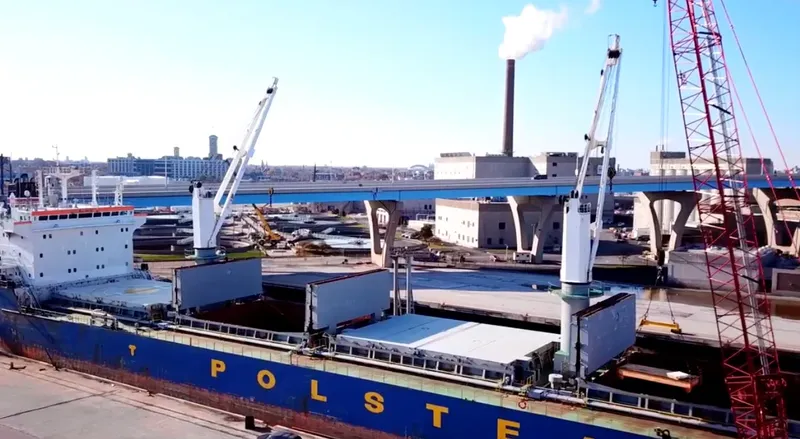
Wisconsin's shoreline is a working shoreline. Ore boats still nose into Superior. Lakers and barges work Milwaukee and Green Bay. Car ferries and island boats stitch the state to Michigan and to the Apostle Islands. Here are five fast facts about the ports that move cargo and people, now and long ago.
1. Wisconsin works two Great Lakes and the Mississippi. Superior is the Wisconsin half of the Port of Duluth-Superior on Lake Superior. Milwaukee, Green Bay and a string of smaller harbors open onto Lake Michigan. La Crosse and Prairie du Chien sit on the Mississippi, with a river road that runs all the way to the Gulf. Cargo has been coming and going by water here since before statehood: grain, coal, salt, limestone, lumber and steel.
Follow this story every morning.
Get Key Reads, our free daily email: the Wisconsin news that matters, in four minutes or less.
2. Superior helps run the biggest tonnage port on the Great Lakes. The twin ports of Duluth and Superior handled 29.6 million short tons of waterborne cargo in 2024 and 25.3 million in 2025. That still makes Duluth-Superior the Great Lakes' largest tonnage port and North America's farthest inland seaport. Iron ore is the heavy hitter, joined by coal, limestone and grain. When the Soo Locks closed in January 2026, six lakers were laid up for the winter on the Superior side, several of them at Fraser Shipyards, where crews spend the freeze-up overhauling boats that will steam again in March.
3. Milwaukee ships cargo and now greets cruise passengers. Port Milwaukee moved 2,322,072 metric tons of cargo in 2025, up 4 percent from 2,232,529 the year before. Dry bulk led the way. The same harbor is building a second life in tourism. The port counted 11,096 cruise passengers on 22 ship calls in 2025, a season that began with the Viking Octantis on April 28 and ended Oct. 9. A new South Shore Cruise Dock, just east of the Lake Express ferry terminal, is slated to open for the 2026 season, when the port expects about 19,000 passengers and has already booked 62 visits. The Lake Express high-speed ferry already runs from that same stretch of waterfront to Muskegon, Michigan.
4. Manitowoc built submarines in fresh water, and the SS Badger still crosses from there. During World War II, the Manitowoc Shipbuilding Company built 28 Gato- and Balao-class submarines for the Navy, the only ones constructed at a freshwater port. About 7,000 people worked there, including more than 600 women. Twenty-five of those boats reached the war in time to see action and together sank 132 Japanese ships. Four were lost at sea. Because the St. Lawrence Seaway did not yet exist, the yard built a floating dry dock so the new boats could pass under Chicago River bridges, enter the sanitary canal, and ride the Mississippi to New Orleans. The Wisconsin Maritime Museum on the Manitowoc riverfront keeps that story alive aboard the USS Cobia, a restored submarine that was not built in town but has become the memorial for the ones that were. Today the SS Badger, a 410-foot car ferry launched in 1953, still steams daily in season between Manitowoc and Ludington, Michigan. She is the last coal-fired passenger steamship operating in the United States and was named a National Historic Landmark in 2016. She can carry 600 passengers and 180 vehicles from mid-May to mid-October.
5. Green Bay still moves freight, and the rest of the shore runs on visitors. The Port of Green Bay, the westernmost port on Lake Michigan, handled 1,696,097 tons of cargo in 2024 on 181 vessels. Fourteen terminals line about three miles of the Fox River, moving cement, limestone, salt, coal and petroleum products. Up the bay, Sturgeon Bay remains a working shipyard town at Fincantieri Bay Shipbuilding. Farther north, the water earns its keep another way. The Madeline Island Ferry runs from Bayfield to La Pointe until the lake freezes. After that, windsleds and then an ice road keep the island tied to the mainland. Other boats run to Washington Island at the tip of Door County. The same shoreline that loads salt and ore also carries families, cars and the summer trade.
Dairyland Sentinel follows a published Editorial Policy, Ethics Statement and Corrections Policy.
Start tomorrow as Wisconsin’s best-informed reader.
The Wisconsin news that matters, in four minutes or less.
Already a subscriber? Support this reporting with a tax-deductible gift.